marchat





A lightweight terminal chat with real-time messaging over WebSockets, optional E2E encryption, and a flexible plugin ecosystem. Built for developers who prefer the command line.
Quick start: QUICKSTART.md for a single-page walkthrough (install, server, client, and where to read next).
E2E in one sentence: Optional chat encryption uses a shared symmetric key (ChaCha20-Poly1305) distributed out of band (MARCHAT_GLOBAL_E2E_KEY, keystore, or equivalent). It is not pairwise Signal-style key exchange: anyone who holds the key can decrypt message and file payloads. See SECURITY.md and PROTOCOL.md.
Good fit: self-hosted teams, terminal-first chat, SQLite or Postgres/MySQL, and optional plugins. Poor fit: hosted SaaS you do not run, or a threat model that requires per-user forward secrecy without a shared secret.
Optional graphical clients
marchat stays terminal-first in this repository, with the TUI as the reference client.
- marchat_flutter: Recommended GUI path and the main graphical client focus.
- marchat-gui: Go and Fyne companion client for desktop use.
Both clients follow the same wire format documented in PROTOCOL.md.
Bots
marchat-bot is a standalone Go SDK for WebSocket bots against a marchat server. It is not a plugin and does not import this module or plugin/sdk; wire types are vendored and the runtime dependency is gorilla/websocket. The SDK does not encrypt or decrypt E2E payloads. It follows the same wire format documented in PROTOCOL.md.
Release notes
Latest tagged release: v1.3.8 (2026-10-01). Narrative history: CHANGELOG.md. Assets and tags: GitHub releases.
main branch: may include changes not yet in that tag (for example items under Unreleased in CHANGELOG.md). Feature descriptions elsewhere in this README match the tree you build from source; compare your binary’s -doctor / -version output to the release page when in doubt.
Demos
Screen recordings of a current build (GIF autoplay depends on the viewer).
Server: startup banner and web admin panel
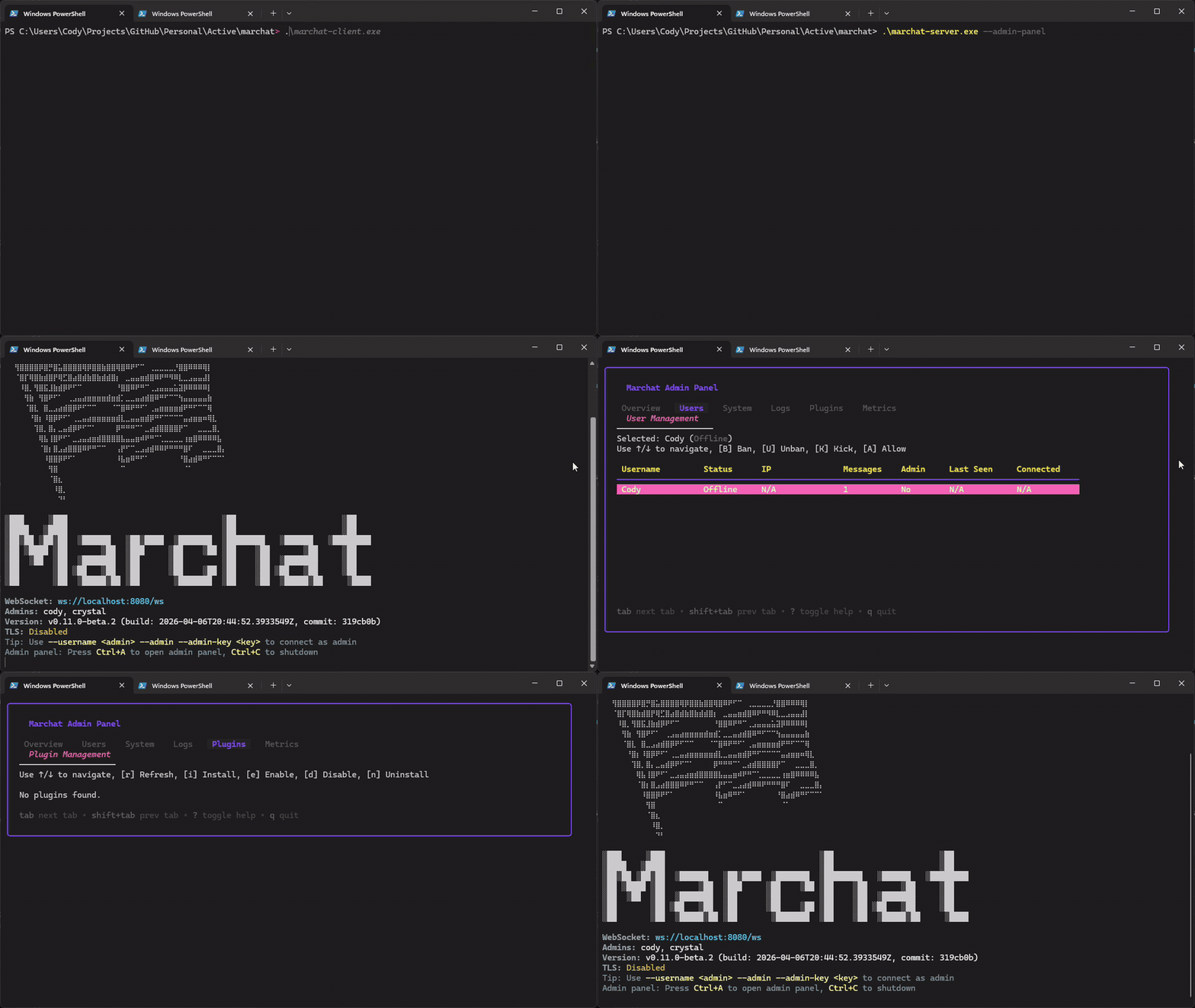
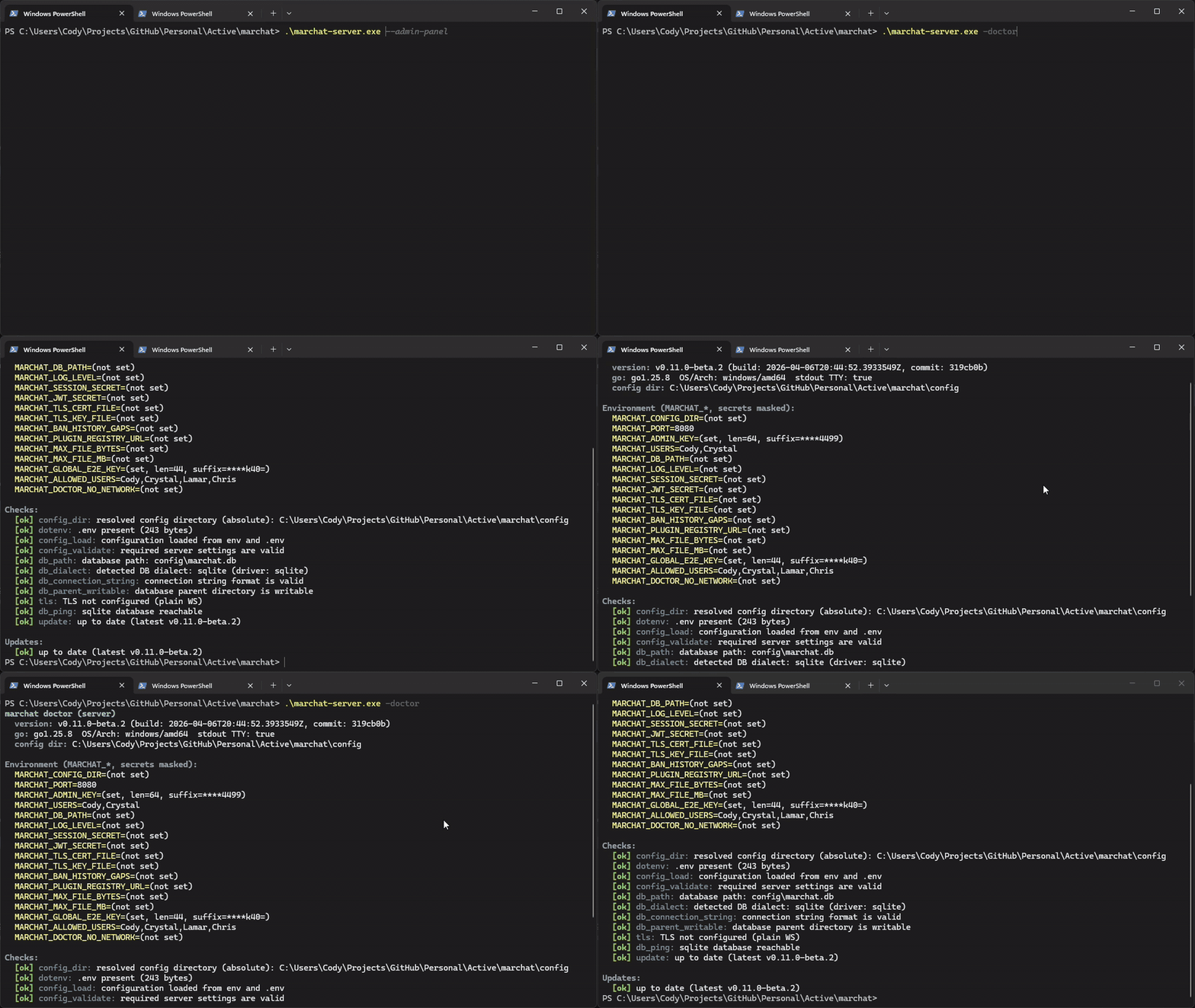
Server: diagnostics (marchat-server -doctor)
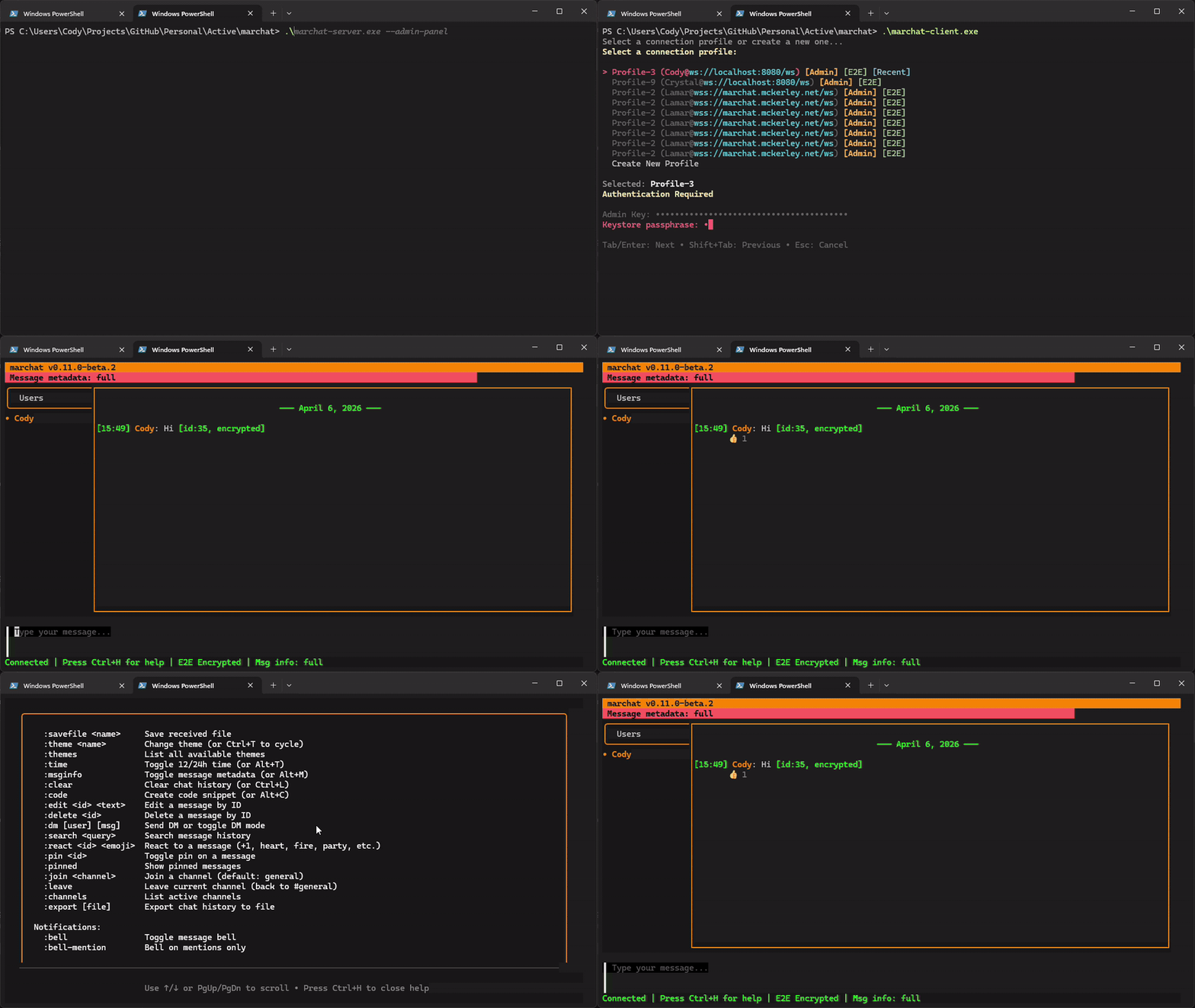
Client: reactions and help
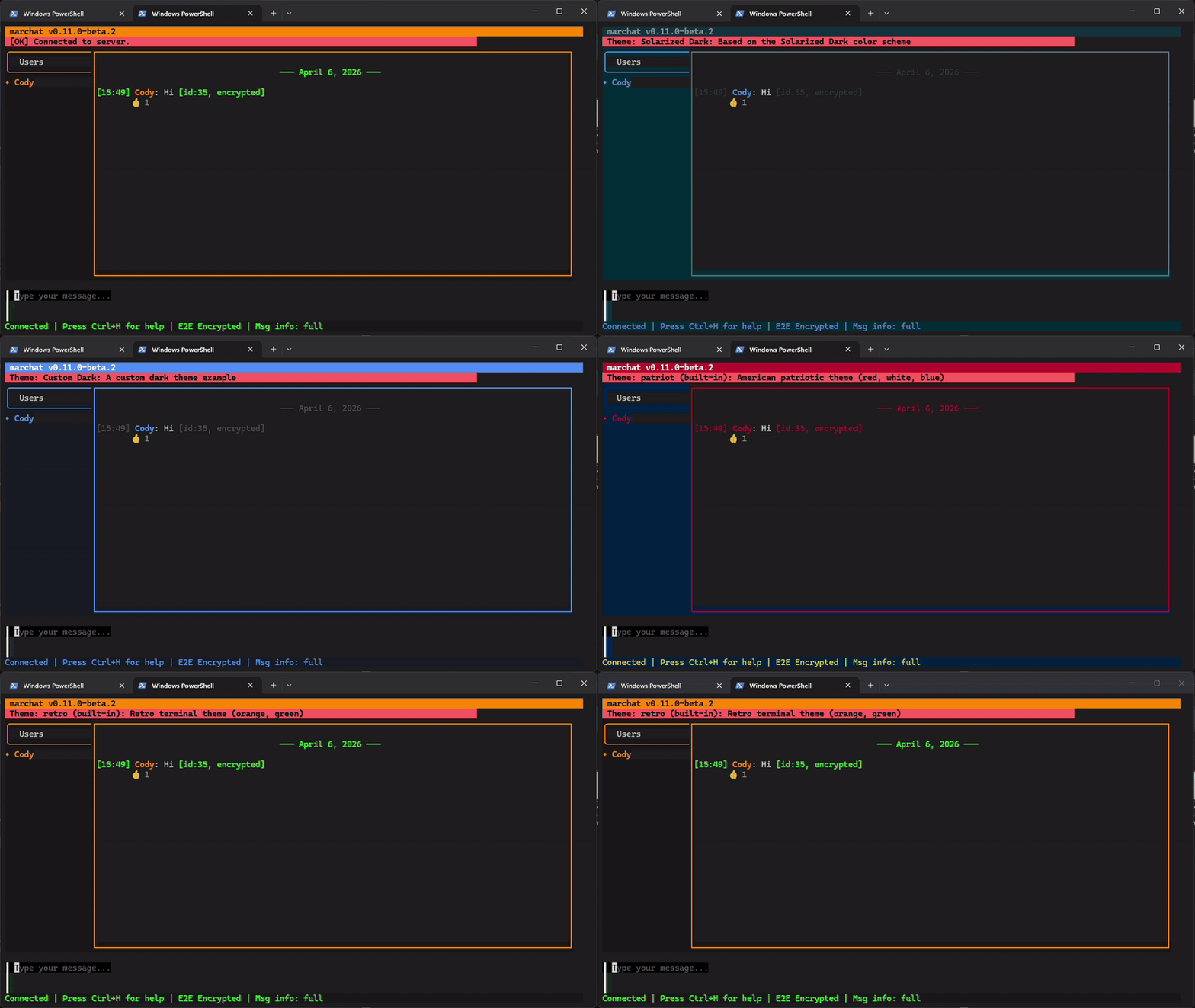
Client: theme switching (:theme)
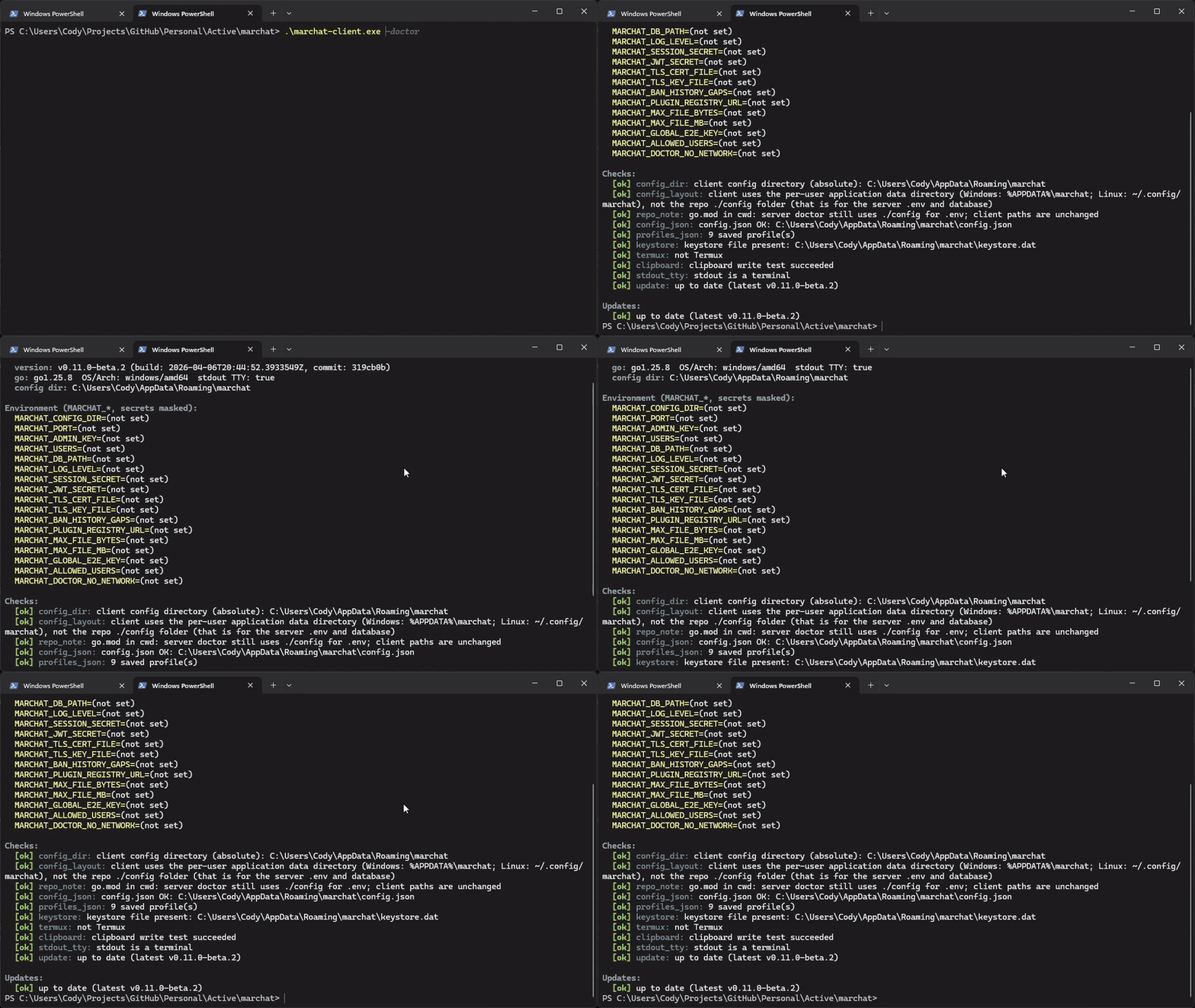
Client: diagnostics (marchat-client -doctor)
Features
- Terminal UI - Beautiful TUI built with Bubble Tea
- Real-time Chat - Fast WebSocket messaging with SQLite, PostgreSQL, or MySQL backends
- Message Management - Edit, delete, pin, react to, and search messages
- Direct Messages - Private DM conversations between users, persisted server-side and replayed on reconnect for sender and recipient
- Channels - Multiple chat rooms with join/leave, persisted channel metadata on messages, and fast local channel switching with filtered transcript history
- Typing Indicators - Channel and DM typing indicators are scoped to the active view
- Read Receipts - Server stores per-user read rows; the reference client sends debounced
read_receipt when the transcript is scrolled to the newest messages
- Plugin System - Remote registry with text commands and Alt+key hotkeys
- E2E Encryption - ChaCha20-Poly1305 with a shared global key (
MARCHAT_GLOBAL_E2E_KEY), including file transfers
- File Sharing - Send files up to 1MB (configurable) with interactive picker and optional E2E encryption
- Admin Controls - User management, bans, kick system with ban history gaps
- Smart Notifications - Bell + desktop notifications with quiet hours and focus mode (guide)
- Themes - Built-in themes + custom themes via JSON (guide)
- Docker Support - Containerized deployment with
docker-compose.yml for local dev; optional TLS reverse proxy via Caddy (guide)
- Health Monitoring -
/health and /health/simple endpoints with system metrics
- Structured Logging - JSON logs with component separation and user tracking
- UX Enhancements - Stable status footer (connection, unread for others' new chat lines when scrolled above the tail, optional E2E and channel), banner for command feedback, tab completion for @mentions, multi-line input, chat export
- Cross-Platform - Runs on Linux, macOS, Windows, and Android/Termux
- Diagnostics -
marchat-client -doctor and marchat-server -doctor (or -doctor-json) summarize environment, resolved paths, and configuration health
Overview
marchat started as a fun weekend project for father-son coding sessions and has evolved into a lightweight, self-hosted terminal chat application designed specifically for developers who love the command line. It supports SQLite by default and can also run against PostgreSQL or MySQL for larger deployments.
Key Benefits:
- Self-hosted: No external services required
- Cross-platform: Linux, macOS, Windows, and Android/Termux
- Secure: Optional E2E encryption with ChaCha20-Poly1305 (global symmetric key)
- Extensible: Plugin ecosystem for custom functionality
- Lightweight: Minimal resource usage, perfect for servers
Quick Start
1. Generate Admin Key
openssl rand -hex 32
2. Start Server
Option A: Environment Variables (Recommended)
export MARCHAT_ADMIN_KEY="your-generated-key"
export MARCHAT_USERS="admin1,admin2"
./marchat-server

# With admin panel
./marchat-server --admin-panel

# With web panel
./marchat-server --web-panel
Option B: Interactive setup (first run, missing required config)
./marchat-server --interactive
Runs a guided wizard only when MARCHAT_ADMIN_KEY or MARCHAT_USERS is not set. If they are already in the environment or config/.env, the server starts normally and --interactive does nothing extra.
3. Connect Client
# Admin connection
./marchat-client --username admin1 --admin --admin-key your-key --server ws://localhost:8080/ws

# Regular user
./marchat-client --username user1 --server ws://localhost:8080/ws

# Or use interactive mode
./marchat-client
Database Schema
Tables created by the server (dialect-aware DDL for SQLite, PostgreSQL, and MySQL):
- messages: Core message storage with
message_id, encryption fields, edit/delete/pin flags, recipient, and persisted channel
- user_message_state: Per-user
last_seen timestamp after handshake (last_message_id column is legacy/unused for replay)
- ban_history: Ban/unban event tracking for history gaps
- message_reactions: Durable emoji reactions (unique per message + user + emoji)
- user_channels: Last channel per user, persisted across reconnects
- read_receipts: Per-user read receipt state tracking
Installation
Binary Installation:
# Linux (amd64)
wget https://github.com/Cod-e-Codes/marchat/releases/download/v1.3.8/marchat-v1.3.8-linux-amd64.zip
unzip marchat-v1.3.8-linux-amd64.zip && chmod +x marchat-*

# macOS (amd64)
wget https://github.com/Cod-e-Codes/marchat/releases/download/v1.3.8/marchat-v1.3.8-darwin-amd64.zip
unzip marchat-v1.3.8-darwin-amd64.zip && chmod +x marchat-*

# Windows - PowerShell
iwr -useb https://raw.githubusercontent.com/Cod-e-Codes/marchat/main/install.ps1 | iex
Package managers:
# Homebrew (macOS / Linux): https://github.com/Cod-e-Codes/homebrew-marchat
brew tap cod-e-codes/marchat
brew install marchat
# Scoop (Windows): https://github.com/Cod-e-Codes/scoop-marchat
scoop bucket add marchat https://github.com/Cod-e-Codes/scoop-marchat
scoop install marchat
winget: winget install Cod-e-Codes.Marchat (listed on winget). Maintainer notes and checksum alignment: PACKAGING.md.
See PACKAGING.md and packaging/ for Homebrew, Scoop, winget, Chocolatey, and AUR: canonical manifest templates here, installs available on those ecosystems, and how each release lines up with downstream publishes.
Docker:
docker pull codecodesxyz/marchat:v1.3.8
docker run -d -p 8080:8080 \
  -e MARCHAT_ADMIN_KEY=$(openssl rand -hex 32) \
  -e MARCHAT_USERS=admin1,admin2 \
  codecodesxyz/marchat:v1.3.8
Docker Compose (local development):
The server service loads config/.env first, then a project-root .env (both optional and gitignored). Put MARCHAT_ADMIN_KEY and MARCHAT_USERS in either file (see Essential Environment Variables). Compose also sets MARCHAT_DB_PATH=/data/marchat.db so SQLite uses the attached volume.
Example snippet for config/.env or .env (generate a strong key for anything reachable from a network):
MARCHAT_ADMIN_KEY=your-secret-here
MARCHAT_USERS=admin1,admin2
Then:
docker compose up -d
TLS reverse proxy (Caddy, optional): To terminate TLS in front of a host-native marchat-server (plain HTTP on port 8080), use docker-compose.proxy.yml, deploy/caddy/Caddyfile, and deploy/caddy/proxy.env.example plus optional gitignored deploy/caddy/proxy.env for MARCHAT_CADDY_EXTRA_HOSTS (public IP/DNS on tls internal). Published port 8443 maps to HTTPS/WebSocket inside the container; clients use wss://localhost:8443/ws (with --skip-tls-verify while using Caddy’s internal CA). The proxy stack must be running whenever you use that URL. Full steps, helper scripts (scripts/build-windows.ps1 / scripts/build-linux.sh, scripts/connect-local-wss.ps1 / scripts/connect-local-wss.sh), source changes, and breaking notes: deploy/CADDY-REVERSE-PROXY.md.
From Source:
git clone https://github.com/Cod-e-Codes/marchat.git && cd marchat
go mod tidy
go build -o marchat-server ./cmd/server
go build -o marchat-client ./client
Prerequisites for source build:
- Go 1.26.8 or later (download)
- Linux clipboard support:
sudo apt install xclip (Ubuntu/Debian) or sudo yum install xclip (RHEL/CentOS)
Terminal colors: The server startup banner and the client’s pre-chat output (connection, E2E status, profile picker tags such as [Admin] / [E2E], and auth prompts) use Lip Gloss v2 (charm.land/lipgloss/v2) for emphasis. Set NO_COLOR=1 (or NO_COLOR) in the environment to disable colors on plain stdout/stderr.
Configuration
Essential Environment Variables
| Variable | Required | Default | Description |
|---|
MARCHAT_ADMIN_KEY | Yes | - | Admin authentication key |
MARCHAT_USERS | Yes | - | Comma-separated admin usernames |
MARCHAT_PORT | No | 8080 | Server port |
MARCHAT_DB_PATH | No | ./config/marchat.db | Database path/DSN. Supports SQLite file path, postgres://..., or mysql:... |
MARCHAT_TLS_CERT_FILE | No | - | TLS certificate (enables wss://) |
MARCHAT_TLS_KEY_FILE | No | - | TLS private key |
MARCHAT_GLOBAL_E2E_KEY | No | - | Base64 32-byte global E2E key (server and/or client). On the client, if set, it overrides the key from keystore.dat for that run only; the keystore file is not updated. See E2E Encryption. |
MARCHAT_MAX_FILE_BYTES | No | 1048576 | Max file size in bytes (1MB default) |
MARCHAT_MAX_FILE_MB | No | 1 | Max file size in MB (alternative to bytes) |
MARCHAT_MAX_MESSAGE_BYTES | No | 32768 | Max chat content in bytes (32 KiB default) |
MARCHAT_MAX_MESSAGE_MB | No | - | Max chat content in MB (alternative to bytes) |
MARCHAT_ALLOWED_USERS | No | - | Username allowlist (comma-separated) |
MARCHAT_ALLOWED_ORIGINS | No | - | Extra WebSocket Origin values (comma-separated URLs or hostnames) |
MARCHAT_TRUSTED_PROXIES | No | - | Reverse-proxy IPs/CIDRs; when set, X-Forwarded-For / X-Real-IP are honored for client IP and admin login rate limits |
Additional variables: MARCHAT_LOG_LEVEL, MARCHAT_CONFIG_DIR, MARCHAT_BAN_HISTORY_GAPS, MARCHAT_PLUGIN_REGISTRY_URL
Database backend setup
MARCHAT_DB_PATH accepts either a SQLite path or a DSN-style backend URL/prefix:
# SQLite (default)
export MARCHAT_DB_PATH=./config/marchat.db

# PostgreSQL
export MARCHAT_DB_PATH='postgres://marchat:marchat@127.0.0.1:5432/marchat?sslmode=disable'

# MySQL
export MARCHAT_DB_PATH='mysql:marchat:marchat@tcp(127.0.0.1:3306)/marchat?parseTime=true'
Notes:
- PostgreSQL requires a reachable database and credentials with schema/table create permissions.
- MySQL/MariaDB:
InitDB parses the DSN with mysql.Config, sets parseTime=true and Loc to local time when needed (you may still include parseTime=true in examples; explicit parseTime=false is overridden with a log warning).
- MariaDB generally works with the same
mysql: DSN shape as MySQL.
- The server creates dialect-specific DDL (for example, MySQL/MariaDB use fixed-width strings where indexes, primary keys, or unique constraints apply, because full
TEXT keys are rejected). Long message bodies still use a large text type.
- SQLite remains the easiest local development option.
Doctor / diagnostics: Set MARCHAT_DOCTOR_NO_NETWORK to 1 to skip the GitHub latest-release check in -doctor / -doctor-json.
File Size Configuration: Use either MARCHAT_MAX_FILE_BYTES (exact bytes) or MARCHAT_MAX_FILE_MB (megabytes). If both are set, MARCHAT_MAX_FILE_BYTES takes priority.
Message Size Configuration: Use either MARCHAT_MAX_MESSAGE_BYTES (exact UTF-8 bytes of wire content) or MARCHAT_MAX_MESSAGE_MB (megabytes). If both are set, MARCHAT_MAX_MESSAGE_BYTES takes priority. Default is 32 KiB. The server rejects oversized chat, DM, edit, search, and command bodies with a System reply and keeps the connection open. Encrypted content is capped as opaque ciphertext. The reference client applies the same env vars before send. See PROTOCOL.md.
Interactive Setup: Use --interactive flag for guided server configuration when environment variables are missing.
Server: config/.env vs process environment
The server loads {config directory}/.env (for a repo clone, usually config/.env) if the file exists, using godotenv.Overload.
| Situation | Effect |
|---|
A variable appears in .env | That value replaces the same name already in the process environment when the server starts. |
A variable is set only in the environment (not in .env) | It is unchanged by .env loading. |
No .env file | Configuration comes only from the environment, flags, and defaults. |
Why: Older godotenv.Load behavior skipped keys already set in the environment, so a stale shell MARCHAT_ADMIN_KEY could override an updated config/.env. Overload makes the file authoritative for any key it defines.
Operational notes: Restart the server after editing .env. If you deploy with both injected secrets and a mounted .env, any overlapping key in the file wins at startup. See deploy/CADDY-REVERSE-PROXY.md for migration and edge cases.
Not the same as Docker Compose’s .env: Compose’s file next to docker-compose.yml is for substituting ${VAR} into YAML; the table above is about marchat-server reading config/.env at runtime.
Client vs server config locations
| Role | Default location | Override |
|---|
Server (.env, SQLite DB, debug log) | In development from a repo clone: ./config next to go.mod. Otherwise MARCHAT_CONFIG_DIR or the user config path (see ARCHITECTURE.md). | MARCHAT_CONFIG_DIR, --config-dir |
Client (config.json, profiles.json, keystore, themes.json) | Per-user app data (e.g. Windows %APPDATA%\marchat, Linux/macOS ~/.config/marchat). Same when developing from source. | MARCHAT_CONFIG_DIR |
Keystore file: The client uses keystore.dat under MARCHAT_CONFIG_DIR or the default app data directory when that file exists; if MARCHAT_CONFIG_DIR is set and has no keystore yet, it still uses an existing keystore.dat in the standard per-user marchat folder. Only after those checks does it use legacy ./keystore.dat in the process working directory, so a stray file in a repo clone does not override your real profile keystore.
The repository’s config/ directory holds server runtime files and the Go package github.com/Cod-e-Codes/marchat/config; it is not the client’s profile folder.
Diagnostics (-doctor)
Run ./marchat-client -doctor or ./marchat-server -doctor for a text report (paths, redacted MARCHAT_* secrets as length-only, other env values as shown, sanity checks). Server doctor lists MARCHAT_* after loading the resolved config directory’s .env (same as the running server), so values are not limited to what your shell exported. Client doctor only shows variables present in the client process (it does not read the server’s config/.env); it also lists experimental client hook env vars and validates receive/send hook paths when set (see CLIENT_HOOKS.md). Client doctor now also reports local DM UI state file status (dm_state.json) and whether E2E key source for this run is env or keystore. Server doctor does not list those client-only hook variables, even if they are set in the shell (for example when you run client and server from the same session). Server doctor also reports the detected DB dialect, validates the configured DB connection string format, attempts a DB ping, and reports DM history privacy behavior. On a color-capable terminal (stdout is a TTY), the text report uses ANSI colors aligned with the server pre-TUI banner; set NO_COLOR or redirect to a file/pipe for plain output. Use -doctor-json for machine-readable output (never colorized). If both flags were passed, -doctor-json wins. Exits without starting the TUI or listening on a port. See ARCHITECTURE.md for details.
Admin Commands
User Management
| Command | Description | Hotkey |
|---|
:ban | Permanent ban | Ctrl+B (with user selected) |
:kick | Disconnect online user + 24h temp ban | Ctrl+K (with user selected) |
:unban | Remove permanent ban | Ctrl+Shift+B |
:allow | Override kick early | Ctrl+Shift+A |
:forcedisconnect | Force disconnect user | Ctrl+F (with user selected) |
:cleanup | Clean stale connections | - |
- Clear DB - Wipe all messages
- Backup DB - Create database backup
- Show Stats - Display database statistics
User Commands
General
| Command | Description | Hotkey |
|---|
:theme | Switch theme (built-in or custom) | Ctrl+T (cycles) |
:themes | List all available themes | - |
:time | Toggle 12/24-hour format | Alt+T |
:msginfo | Toggle message metadata (message id / encrypted) on chat lines | Alt+M |
:clear | Clear chat buffer | Ctrl+L |
:q | Quit application (vim-style) | - |
:sendfile [path] | Send file (or open picker without path) | Alt+F |
:savefile | Save received file | - |
:code | Open code composer with syntax highlighting | Alt+C |
:export [file] | Export chat history to a text file | - |
Messaging
| Command | Description |
|---|
:edit | Edit your own message by ID (admins cannot edit others' messages; with E2E on, the new text is encrypted like normal chat and the server keeps is_encrypted in sync) |
:delete | Delete a message by its ID |
:dm [user] [msg] | Send a DM, switch to a DM conversation (:dm ), or return to global chat (:dm off) |
:dms | List DM conversations currently visible in the sidebar (includes unread counts) |
:dmhide [user] | Hide a DM conversation from the sidebar (or hide the active DM thread when no user is provided) |
:search | Search message history on the server (SQL LIKE on stored content; with E2E, that is ciphertext, not decrypted plaintext) |
:react | React to a message (aliases include +1, thumbsup, -1, thumbsdown, heart, fire, party, etc.) |
:unreact | Remove your reaction from a message |
:thumbsup / :thumbsdown | Shortcuts to react with thumbs up or down |
:pin | Toggle pin on a message |
:pinned | List all pinned messages |
DM unread rule in the reference TUI:
- Unread for a DM thread counts inbound DM messages from that user while that thread is not active.
- Opening a DM thread marks that thread as read immediately.
- Unread tracking and hidden thread state are saved in the client config directory (
dm_state.json) and restored on reconnect.
- Hidden threads reappear automatically when a new inbound DM arrives from that user.
Channels
| Command | Description |
|---|
:join | Join a channel (clients start in #general) |
:leave | Leave current channel, return to #general |
:channels | List active channels with user counts |
Notifications
| Command | Description | Hotkey |
|---|
:notify-mode | Set notification mode (none/bell/desktop/both) | Alt+N (toggle desktop) |
:bell | Toggle bell notifications | - |
:bell-mention | Toggle mention-only notifications | - |
:focus [duration] | Enable focus mode (mute notifications) | - |
:quiet | Set quiet hours (e.g., :quiet 22 8) | - |
> Note: Hotkeys work in both encrypted and unencrypted sessions since they're handled client-side.
>
> Notifications: See NOTIFICATIONS.md for full notification system documentation including desktop notifications, quiet hours, and focus mode.
Plugin Commands
Plugin management (install, uninstall, enable, disable) is admin-only. Plugin chat commands (e.g. :echo, :weather) are available to all users unless the plugin manifest sets AdminOnly: true. See Plugin Management hotkeys for keyboard shortcuts.
| Command | Description | Hotkey |
|---|
:store | Browse plugin store | Alt+S |
:plugin list or :list | List installed plugins | Alt+P |
:plugin install or :install | Install plugin | Alt+I |
:plugin uninstall or :uninstall | Uninstall plugin | Alt+U |
:plugin enable or :enable | Enable plugin | Alt+E |
:plugin disable or :disable | Disable plugin | Alt+D |
:refresh | Refresh plugin list from registry | Alt+R |
> Note: Both text commands and hotkeys work in E2E encrypted sessions (sent as admin messages that bypass encryption).
File Sharing
Direct send:
:sendfile /path/to/file.txt
Interactive picker:
:sendfile
Navigate with arrow keys, Enter to select/open folders, ".. (Parent Directory)" to go up.
Supported types: Text, code, images, documents, archives (.txt, .md, .json, .go, .py, .js, .png, .jpg, .pdf, .zip, etc.)
Keyboard Shortcuts
General
| Key | Action |
|---|
Ctrl+H | Toggle help overlay |
Enter | Send message |
Alt+Enter / Ctrl+J | Insert newline (multi-line input) |
Tab | Autocomplete @mentions |
Esc | Close menus / dialogs |
:q | Quit application (vim-style) |
↑/↓ | Scroll chat |
PgUp/PgDn | Page through chat |
Ctrl+C/V/X/A | Copy/Paste/Cut/Select all |
User Features
| Key | Action |
|---|
Alt+F | Send file (file picker) |
Alt+C | Create code snippet |
Ctrl+T | Cycle themes |
Alt+T | Toggle 12/24h time |
Alt+M | Toggle message metadata (id / encrypted) on chat lines |
Alt+N | Toggle desktop notifications |
Ctrl+L | Clear chat history |
> Multi-line input: Use Alt+Enter or Ctrl+J to insert newlines. Shift+Enter is not reliably supported on Windows terminals.
Admin Interface (Client)
| Key | Action |
|---|
Ctrl+U | Select/cycle user |
Ctrl+D | Database operations menu |
Ctrl+K | Kick selected user |
Ctrl+B | Ban selected user |
Ctrl+F | Force disconnect selected user |
Ctrl+Shift+B | Unban user (prompts for username) |
Ctrl+Shift+A | Allow user (prompts for username) |
Plugin Management (Admin)
| Key | Action |
|---|
Alt+P | List installed plugins |
Alt+S | View plugin store |
Alt+R | Refresh plugin list |
Alt+I | Install plugin (prompts for name) |
Alt+U | Uninstall plugin (prompts for name) |
Alt+E | Enable plugin (prompts for name) |
Alt+D | Disable plugin (prompts for name) |
Server
| Key | Action |
|---|
Ctrl+A | Open terminal admin panel |
Admin Panels
Terminal Admin Panel
Enable with --admin-panel flag, then press Ctrl+A to access:
- Real-time server statistics (users, messages, performance)
- User management interface
- Plugin configuration
- Database operations
- Requires terminal environment (auto-disabled in systemd/non-terminal)
Web Admin Panel
Enable with --web-panel flag, access at http://localhost:8080/admin:
- Sidebar-navigation layout (Overview, Users, System, Logs, Plugins, Metrics)
- Secure session-based login (1-hour expiration)
- Live dashboard with stats cards, configuration, and database info
- User management table with status badges, ban/kick with confirmation modals
- System management with config viewer and database statistics
- Real-time log viewer with level/component/timestamp columns
- Plugin management with install, enable, disable, uninstall actions
- Performance metrics with connection, message, and memory history
- RESTful API endpoints with session cookie auth
- CSRF protection on all state-changing operations (HttpOnly + SameSite cookies)
- Responsive design (sidebar collapses on mobile with hamburger menu)
API Example:
curl -H "Cookie: admin_session=YOUR_SESSION" http://localhost:8080/admin/api/overview
TLS Support
When to Use TLS
- Public deployments: Server accessible from internet
- Production environments: Enhanced security required
- Corporate networks: Security policy compliance
- HTTPS reverse proxies: Behind nginx, traefik, Caddy, etc.
Reverse proxy (Caddy)
The repo includes a Docker Compose-based Caddy setup for local or LAN use: docker-compose.proxy.yml, deploy/caddy/Caddyfile, deploy/caddy/proxy.env.example (and optional local deploy/caddy/proxy.env), and the walkthrough deploy/CADDY-REVERSE-PROXY.md (build flags, config/.env, firewall, wss:// client flags, E2E, and breaking change: config/.env is applied with godotenv.Overload so file values override pre-set MARCHAT_* in the process environment).
Quick reference:
| Item | Role |
|---|
marchat-server on the host | Listens on 8080 (ws://), reads config/.env |
docker compose -f docker-compose.proxy.yml up -d | Runs Caddy; host 8443 → container 443 |
| Client | wss://localhost:8443/ws + --skip-tls-verify until you use a public CA cert on Caddy |
| If 8443 is refused | Caddy is not running; start the compose stack or use ws://127.0.0.1:8080/ws |
Configuration Examples
With TLS (production):
# Generate self-signed cert (testing only)
openssl req -x509 -newkey rsa:4096 -keyout key.pem -out cert.pem -days 365 -nodes

export MARCHAT_ADMIN_KEY="your-key"
export MARCHAT_USERS="admin1,admin2"
export MARCHAT_TLS_CERT_FILE="./cert.pem"
export MARCHAT_TLS_KEY_FILE="./key.pem"
./marchat-server  # Shows wss:// in banner
Without TLS (development):
export MARCHAT_ADMIN_KEY="your-key"
export MARCHAT_USERS="admin1,admin2"
./marchat-server  # Shows ws:// in banner
Client with TLS:
# With verification (production)
./marchat-client --server wss://localhost:8080/ws

# Skip verification (dev/self-signed only)
./marchat-client --skip-tls-verify --server wss://localhost:8080/ws
> Warning: Use --skip-tls-verify only for development. Production should use valid CA-signed certificates.
E2E Encryption
Global encryption for secure group chat using shared keys across all clients.
How It Works
- Shared Key Model: All clients use the same 32-byte global key for encrypted channel chat, direct messages, and optional encrypted files
- Simplified Management: No per-user public-key exchange on the wire; distribute the key out-of-band (env var or copy from first client)
- ChaCha20-Poly1305: Authenticated encryption for payloads; see PROTOCOL.md for the on-the-wire layout
- Environment Variable:
MARCHAT_GLOBAL_E2E_KEY (base64) for key distribution
- Auto-Generation: First client can generate a key if none is provided (then share it to peers)
Setup Options
Option 1: Shared Key (Recommended)
# Generate 32-byte key
openssl rand -base64 32

# Set on all clients
export MARCHAT_GLOBAL_E2E_KEY="your-generated-key"

# Connect with E2E
./marchat-client --e2e --keystore-passphrase your-pass --username alice --server ws://localhost:8080/ws
Option 2: Auto-Generate
# Client generates a key and saves it to the encrypted keystore (raw key is not printed)
./marchat-client --e2e --keystore-passphrase your-pass --username alice --server ws://localhost:8080/ws

# Output shows Key ID only, e.g.:
# [INFO] Generated new global E2E key (ID: RsLi9ON0...)
# [TIP] The key is not printed ... (copy keystore.dat + passphrase, or pre-share MARCHAT_GLOBAL_E2E_KEY)
Expected Output
[INFO] Using global E2E key from environment variable
E2E encryption enabled
Using global E2E key from environment variable
Global chat encryption: ENABLED (Key ID: RsLi9ON0...)
Encryption validation passed
E2E encryption enabled with keystore: config/keystore.dat
Security Features
- Server Privacy: Server cannot read encrypted message bodies when E2E is used
- Local Keystore: Global key stored in a passphrase-protected file (PBKDF2 + AES-GCM); see Keystore file format below
- No raw key on stdout: Auto-generated global keys are not echoed in full (reduces exposure via logs, scrollback, or screen capture); only a Key ID is shown in
[INFO].
- Validation: Automatic encryption/decryption round-trip test on startup
- On-disk format (current):
keystore.dat is a small binary file: a fixed magic and version, a random 16-byte salt stored in the file, then AES-GCM ciphertext of the JSON payload (including the global ChaCha20-Poly1305 key). The passphrase is stretched with PBKDF2 (SHA-256, 100k iterations) using that embedded salt. This means the same passphrase unlocks the file even if the absolute path to keystore.dat changes (for example after moving the file or when the client resolves a different config directory). Older files that derived PBKDF2 salt from the keystore path are still supported: on first successful unlock they are rewritten in the new format.
- Environment variable vs file: If
MARCHAT_GLOBAL_E2E_KEY is set in the client process, that key is used for encryption/decryption for this run. The on-disk keystore is not modified. You will see [INFO] Using global E2E key from environment variable. If you later unset the variable, the client uses the key from keystore.dat again, so the effective key can appear to “change back” even though the file was never updated. To persist a shared key in the file, run without the env var once. When the client auto-generates a key, it does not print the raw base64 material (only a Key ID); share the key with other clients by copying keystore.dat and the same passphrase, or by agreeing on MARCHAT_GLOBAL_E2E_KEY beforehand (e.g. openssl rand -base64 32 on a trusted machine).
- Which file is used: Same resolution order as in Client vs server config locations above (primary config dir → per-user marchat keystore when override is empty → cwd legacy).
- Legacy note: Keystore wrapping was previously upgraded to PBKDF2 (replacing an older derivation). Very old keystores from that era may still need re-initialization if they cannot be decrypted.
Plugin System
Extend functionality with remote plugins from configured registry.
Default registry source: Cod-e-Codes/marchat-plugins.
Configuration
# Default GitHub registry
export MARCHAT_PLUGIN_REGISTRY_URL="https://raw.githubusercontent.com/Cod-e-Codes/marchat-plugins/main/registry.json"

# Custom registry
export MARCHAT_PLUGIN_REGISTRY_URL="https://my-registry.com/plugins.json"
Commands
Text commands:
:store                    # Browse available plugins
:plugin install echo      # Install plugin
:plugin list              # List installed
:plugin uninstall echo    # Remove plugin
:enable echo              # Enable installed plugin
:disable echo             # Disable plugin
:refresh                  # Refresh plugin registry
Keyboard shortcuts (Admin only):
Alt+P - List installed pluginsAlt+S - View plugin storeAlt+R - Refresh plugin listAlt+I - Install plugin (prompts for name)Alt+U - Uninstall plugin (prompts for name)Alt+E - Enable plugin (prompts for name)Alt+D - Disable plugin (prompts for name)
> Note: Plugin management commands and custom plugin commands (e.g., :echo) work in E2E encrypted sessions. See Plugin Commands for full reference.
Available Plugins
- echo (v2.0.1): Simple echo plugin for testing (provides
:echo command)
- weather (v1.0.0): Get weather information and forecasts using wttr.in (
:weather [location], :forecast [location])
- githooks (v1.0.0): Git repository management with status, log, branch, and diff commands (
:git-status, :git-log, :git-branch, :git-diff, :git-watch admin-only)
See PLUGIN_ECOSYSTEM.md for the development guide and marchat-plugins for the default plugin catalog repository.
Moderation System
Temporary Kicks (24 hours, online only):
:kick or Ctrl+K disconnects a connected user and applies a 24h temporary ban- Fails when the user is not connected (use
:ban for offline moderation)
- Auto-allowed after 24 hours, or override early with
:allow
- Ideal for cooling-off periods
Permanent Bans (offline-capable):
:ban or Ctrl+B for serious violations- Remains until manual
:unban or Ctrl+Shift+B
- Ideal for persistent troublemakers
Ban History Gaps:
Prevents banned users from seeing messages sent during ban periods. Enable with MARCHAT_BAN_HISTORY_GAPS=true (disabled by default).
Client Configuration
Interactive Mode (Default)
./marchat-client
Guides through server URL, username, admin privileges, E2E encryption, theme selection, and profile saving.
Quick Start Options
# Auto-connect to recent profile
./marchat-client --auto

# Select from saved profiles
./marchat-client --quick-start
Profile Management
Profiles stored in platform-appropriate locations:
- Windows:
%APPDATA%\marchat\profiles.json
- macOS:
~/Library/Application Support/marchat/profiles.json
- Linux:
~/.config/marchat/profiles.json
During profile selection:
i or v - View profile detailsr - Rename profiled - Delete profile
Traditional Flags
# Basic connection
./marchat-client --server ws://localhost:8080/ws --username alice

# Admin connection
./marchat-client --server ws://localhost:8080/ws --username admin --admin --admin-key your-key

# E2E encrypted
./marchat-client --server ws://localhost:8080/ws --username alice --e2e --keystore-passphrase your-pass

# Non-interactive (requires all flags)
./marchat-client --non-interactive --server ws://localhost:8080/ws --username alice
Advanced features
Experimental client hooks (local automation)
The TUI client can spawn optional external programs on send/receive and pass one JSON line on stdin per event, useful for custom logging, bridges, or local tooling. This is experimental (protocol may change); it does not replace server plugins or built-in notifications.
- Documentation: CLIENT_HOOKS.md (security model, env vars, JSON shape).
- Entrypoint: from the repo root,
go run ./client (the client lives in client/, not the repo root).
Security Best Practices
-
Generate Secure Keys
# Admin key (64 hex characters)
openssl rand -hex 32

# Global E2E key (base64-encoded 32 bytes)
openssl rand -base64 32
-
Secure File Permissions
chmod 600 ./config/marchat.db    # Database
chmod 600 ./config/keystore.dat  # Keystore
chmod 700 ./config               # Config directory
-
Production Deployment
- Use TLS (
wss://) with valid CA-signed certificates
- Deploy behind reverse proxy (nginx, traefik, or Caddy; see deploy/CADDY-REVERSE-PROXY.md for the bundled Caddy example)
- Restrict server access to trusted networks
- Use Docker secrets for sensitive environment variables
- Enable rate limiting and brute force protection
- Monitor security logs regularly
-
E2E Encryption
- Store
MARCHAT_GLOBAL_E2E_KEY securely
- Use strong keystore passphrases
- Never share keystores between users
- Rotate keys periodically for sensitive deployments
-
Username Allowlist (Optional)
# Restrict to specific users for private servers
export MARCHAT_ALLOWED_USERS="alice,bob,charlie"
- Usernames validated (letters, numbers,
_, -, . only)
- Max 32 characters, cannot start with
: or .
- Case-insensitive matching
- Protects against log injection and command injection
Troubleshooting
| Issue | Solution |
|---|
| Wrong config folder / paths | Run ./marchat-client -doctor or ./marchat-server -doctor (add -doctor-json for scripts; set NO_COLOR for plain text). See Client vs server config locations. Server: if you set MARCHAT_CONFIG_DIR only in config/.env, restart after saving; the loader re-reads it after Overload. |
| Connection failed | Use ws:// or wss:// and the path your server uses (default HTTP handler is /ws, e.g. ws://host:8080/ws). |
wss://localhost:8443 reconnect loop / connection refused | Ensure Caddy (or your proxy) is up: docker compose -f docker-compose.proxy.yml up -d, or connect directly with ws://127.0.0.1:8080/ws (reverse proxy guide). |
| Admin commands not working | Client must use --admin and --admin-key matching the server’s MARCHAT_ADMIN_KEY; username must be listed in MARCHAT_USERS. |
| Clipboard issues (Linux) | Install a clipboard tool (e.g. sudo apt install xclip or xsel). |
| Port in use | Set MARCHAT_PORT (e.g. 8081) in the environment or config/.env and restart the server. |
| Database migration fails | Check file permissions; back up the database before upgrades; run the same server binary version that created the schema. |
| PostgreSQL connection fails | Verify URL format: postgres://user:pass@host:5432/db?sslmode=disable; test with psql using the same credentials. |
| MySQL connection fails | Verify DSN prefix mysql: and body user:pass@tcp(host:3306)/db (optional ?parseTime=true; server forces parseTime when opening). Test with the mysql CLI. |
| SQL syntax error after backend switch | Ensure tables were created by the current server version and restart after changing MARCHAT_DB_PATH. |
| Message history looks incomplete | History depends on channel (reference TUI shows the active channel only), the server replay window (up to 50 recent messages per handshake), and filters such as DM visibility and optional ban history gaps (MARCHAT_BAN_HISTORY_GAPS). Ban/unban can reset per-user state so scrollback differs from the raw DB. |
| Transcript resets after reconnect | On each successful WebSocket connect the reference client clears local messages and rebuilds from the server handshake replay (up to 50 recent lines). That avoids duplicates when the server comes back while the client stayed open. Lines older than that replay window are not shown again in that session unless you saved them with :export earlier. Third-party clients should replace or dedupe history on handshake; see PROTOCOL.md (Server Behavior). |
Banner stuck on [Sending...] | Current client clears sending after each successful WebSocket write for normal chat and for admin_command, so dropped or slow server work does not leave the banner stuck. Current server sends a System line for unknown admin : commands (Unknown command: plus the token) and one System line when per-connection message rate burst is exceeded (see PROTOCOL.md Rate Limiting). |
| Footer unread looks wrong | The reference client increments unread only for other users' new text, dm, or file while the transcript is not at the bottom. It does not increment for typing, reactions, read receipts, edits, deletes, or your own echoed sends. See ARCHITECTURE.md (client). |
| Ban history gaps not working | Set MARCHAT_BAN_HISTORY_GAPS=true (default off). The server creates the ban_history table when using a database backend that runs marchat migrations. |
| TLS certificate errors | For dev/self-signed certs, pass --skip-tls-verify on the client (or enable Skip TLS verify in the profile / interactive setup). |
| Plugin installation fails | Check registry URL (MARCHAT_PLUGIN_REGISTRY_URL), network access, and JSON validity; commercial plugins need a valid license for the plugin name (see PLUGIN_ECOSYSTEM.md). |
| E2E encryption errors | Use --e2e and the keystore passphrase; see E2E Encryption (keystore path, MARCHAT_GLOBAL_E2E_KEY vs file). Client and server must share the same global key material. |
| Global E2E key errors | Key must be base64 encoding 32 raw bytes (openssl rand -base64 32). MARCHAT_GLOBAL_E2E_KEY overrides the in-memory key for that process and is not written to the keystore file. |
:savefile picks the wrong payload when names collide | Received files are stored per sender internally, but :savefile matches basename only. If two users sent the same filename, which copy is saved is not deterministic; ask for distinct names or avoid duplicate basenames until disambiguation is exposed in the UI. |
| Send file / nothing happens | Check the footer (Connected vs Disconnected). If disconnected, :sendfile should report Not connected to server; reconnect, then retry (including Alt+F after a connection is up). |
| Username already taken | A live or stale session may still hold the name. Admin: :forcedisconnect . Otherwise the server’s ~5 minute WebSocket ping sweep removes broken clients (or run :cleanup). |
| Stale / ghost sessions | Same as above: wait for the ping sweep, run :cleanup, or :forcedisconnect. |
| Multi-line input not working | Use Alt+Enter or Ctrl+J in the input (plain Enter sends). Shift+Enter is unreliable on many Windows terminals. |
| Doctor / CI noise | For automated checks, use -doctor-json. Secret values are redacted to length only (no suffix). |
Stale Connection Management
Automatic: The hub runs CleanupStaleConnections about every 5 minutes: it sends a WebSocket ping per client; failures remove the client and free the username.
Manual (admin, from the client):
:cleanup                    # Run stale check now for all clients
:forcedisconnect      # Drop a specific connected user
Typical cases:
- Abrupt client exit: may linger until the next ping sweep or
:cleanup.
- Half-open TCP: same;
:forcedisconnect clears it immediately if the server still lists the user.
- Immediate reclaim of a name: use
:forcedisconnect (do not rely on the sweep if you need instant reuse).
Testing
Foundational test suite covering core functionality, cryptography, and plugins. CI (.github/workflows/go.yml) runs the full suite with the race detector and a separate database-smoke job against Postgres and MySQL (see TESTING.md).
Running Tests
go test ./...              # Run all tests (main module only)
go test -cover ./...       # With coverage
go test ./server -v        # Specific package
go test ./... -timeout 10s # With timeout (CI recommended)
cd plugin/sdk && go test ./...   # Nested SDK module (separate go.mod)
Test Scripts
- Linux/macOS:
./test.sh
- Windows:
.\test.ps1
Coverage Summary
Percentages are statement coverage from a merged profile (go test -coverprofile=... ./... then go tool cover -func=...). Authoritative tables and regeneration steps: TESTING.md. The nested plugin/sdk module is measured separately (58.8% statements); see TESTING.md.
| Package | Coverage | Status |
|---|
shared | 88.1% | High |
plugin/license | 87.1% | High |
client/crypto | 84.9% | High |
config | 74.0% | High |
plugin/host | 66.0% | Medium |
client/config | 57.4% | Medium |
internal/doctor | 65.9% | Medium |
plugin/store | 44.8% | Medium |
cmd/license | 42.2% | Medium |
server | 51.5% | Medium |
plugin/manager | 65.6% | Medium |
client/exthook | 24.1% | Low |
client | 36.3% | Low |
cmd/server | 13.4% | Low |
Overall: 48.3% (main module packages only). See TESTING.md for detailed information.
Contributing
We welcome contributions! See CONTRIBUTING.md for workflow, required checks, and a suggested reading order before your first PR.
Clone and test:
git clone https://github.com/Cod-e-Codes/marchat.git
cd marchat
go mod tidy
go test ./...
Documentation
- docs/README.md - Index of all documentation
- CHANGELOG.md - Narrative release history
- QUICKSTART.md - Short path from install to first client connection
- PACKAGING.md - winget, Chocolatey, Homebrew, Scoop, AUR installs, in-repo templates, and release alignment
- ARCHITECTURE.md - Components, data flow, config paths, diagnostics
- PROTOCOL.md - WebSocket message types and payloads
- deploy/CADDY-REVERSE-PROXY.md - Optional TLS reverse proxy (Caddy) for local or LAN
wss://
- NOTIFICATIONS.md - Notification system guide (desktop, quiet hours, focus mode)
- CLIENT_HOOKS.md - Experimental client-side external hooks (local automation)
- THEMES.md - Custom theme creation guide
- PLUGIN_ECOSYSTEM.md - Plugin development guide
- ROADMAP.md - Planned features and enhancements
- TESTING.md - Comprehensive testing guide
- CONTRIBUTING.md - Contribution guidelines
- SECURITY.md - Security policy and reporting
- CONTRIBUTORS.md - Full contributor list
Getting Help
Appreciation
Thanks to Self-Host Weekly, mtkblogs.com, and Terminal Trove for featuring marchat!
See CONTRIBUTORS.md for full contributor list.
License: MIT License