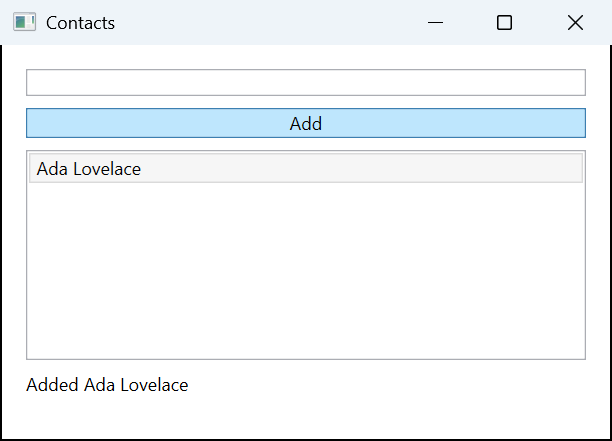
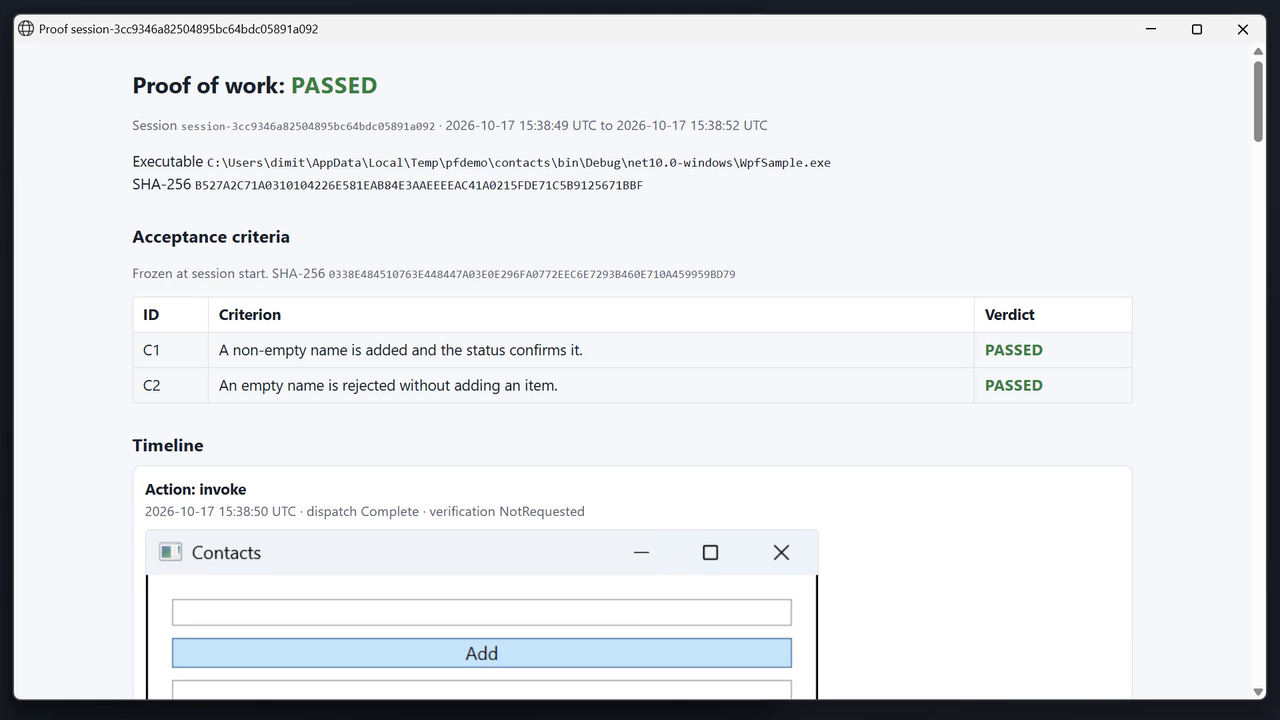
Pointframe is a lightweight Windows screen capture and annotation tool designed to help users create precise and annotated screenshots or recordings for bug reports, tutorials, and fast feedback.
Key Features:
Capture any region of the screen with a single keystroke and annotate it with arrows, shapes, text, blur, and numbered steps.
Record screen activity to MP4 with optional microphone audio, adding live annotations during recording.
Extract text from screenshots using built-in OCR, making it easy to copy and share important information.
Pin annotated screenshots as floating, always-on-top windows for quick reference while working.
Blur sensitive content in real time to protect private data before sharing.
Audience & Benefit:
Ideal for developers, educators, technical writers, and anyone who needs to communicate complex ideas visually. Pointframe helps users create clear, actionable visual feedback without leaving their workflow, improving collaboration and reducing misunderstandings.
Pointframe can be installed via winget using the command winget install DimitarRadenkov.Pointframe.
README
Pointframe
Pointframe
The free, open-source Windows screen tool that lets you annotate and blur your screen while you record — no post-editing.
Capture, annotate, redact, record to MP4/GIF, and pull text off the screen with OCR — all from one lightweight tray app.
Privacy First (Live Blur): Drag over sensitive content (passwords, emails, API keys) to apply a live Gaussian blur that stays hidden in the final export.
Built-in OCR: Lasso any text on your screen (even in images or videos) to instantly copy it to your clipboard.
Pin to Screen: Pin captured screenshots as floating, always-on-top windows for quick reference while coding or writing.
Latest features
Show your point while recording — Draw on the captured region as you record, then switch between interactive and drawing modes from the HUD.
Stay in control without breaking flow — Pause, resume, stop, switch tools, clear annotations, and open the output folder from one floating HUD.
Redact sensitive content live — Blur annotations now sample from the live recording region, so private details stay hidden in the final video.
Why people use it
Show the problem, not just describe it — Bugs and UI issues are easier to understand when the screenshot or recording already contains the important highlights.
Make tutorials easier to follow — Arrows, text, and numbered steps keep people focused on what matters.
Hide private details before sharing — Blur emails, passwords, tokens, and anything else you do not want on screen.
Work from one place — Capture, annotate, copy, save, pin, and record without bouncing between tools.
Features
Region capture — Press the configured hotkey (default: Print Screen) to draw a selection on screen
Whole-screen snip — Instantly capture the entire screen from the tray icon or a dedicated hotkey
Frozen screen snapshot — The screen is captured instantly when the hotkey is pressed, freezing menus, tooltips, and popups exactly as they appear
Selection magnifier — A zoomed loupe follows your cursor while drawing the capture region for pixel-accurate selection
Configurable capture hotkeys — Change the region-capture hotkey and the whole-screen record hotkey independently from Settings
Style presets — Up to 5 named color-and-thickness shortcuts shown as quick-access dots in the annotation toolbar; fully configurable in Settings
Color picker tool — Sample any pixel color from the frozen screenshot; the loupe zooms in with a hex preview and sets the active annotation color
Pixel ruler tool — Draw a ruler across the screenshot to measure distances in pixels
Blur tool — Drag over sensitive content (faces, emails, passwords) to apply a Gaussian blur before sharing
OCR — Copy Text — Draw a lasso around text in the screenshot to extract it via OCR and copy to clipboard (uses Windows.Media.Ocr, no external dependencies)
Open existing image — Load a PNG, JPG/JPEG, or BMP from the tray menu and annotate it without taking a new screenshot
Pin screenshot — Pin the captured screenshot as a floating, always-on-top, resizable window for quick reference while you work
Undo / redo — Full undo/redo stack during annotation
Copy & auto-save — Copy to clipboard; optional auto-save to a configurable folder
Screen recording — Record a selected region to MP4 (H.264 via ffmpeg) or start a whole-screen recording instantly with Ctrl+Shift+R (default); optional microphone audio from a selected Windows input device
Recording-time annotations — Add shapes and text directly on top of a recording while it is in progress; switch between draw mode and interact mode from the floating HUD
Cursor highlight — Configurable glowing ring around the cursor during recording so viewers never lose track of your pointer
Click ripple — Visual ripple effect on mouse clicks during recording to make interactions obvious
GIF export — Export any recent recording to GIF directly from the tray's Recent recordings menu (requires ffmpeg)
Capture delay — Configurable countdown (0 / 3 / 5 / 10 s) before the selection overlay appears, useful for capturing menus and hover states
Auto-updates — A background service checks GitHub Releases on every launch and on a configurable schedule (every day / 2 days / 3 days). When a new version is found a tray balloon appears; click it to confirm, watch the progress bar, and the installer runs automatically — no browser, no manual downloads
System tray — Runs silently in the background; all actions accessible from the tray icon
Theme support — Choose Light, Dark, or follow the system theme from Settings
Use cases
Bug reports — Capture a precise region, annotate it, and copy or save the result for issue tracking and support requests
Documentation — Create quick step-by-step screenshots with arrows, numbered steps, and text callouts for guides and tutorials
Live workflow capture — Record a selected region while drawing annotations on top of the recording as you work
Sensitive content redaction — Blur passwords, emails, and other private details before sharing screenshots or recordings
Text extraction — Select text in a screenshot with OCR and copy it directly to the clipboard
System tray menu
Right-click the tray icon to access all actions:
Item
Description
New Snip
Open the region-capture overlay (same as the capture hotkey)
Whole screen snip
Instantly capture the entire screen
Open image…
Load a PNG / JPG / BMP file and open it in the annotation overlay
Recent captures
Submenu listing the last 5 saved screenshots; each has Open and Open folder actions
Recent recordings
Submenu listing the last 5 recordings; each has Open, Open folder, and Export to GIF actions
Settings
Open the Settings window
Check for Updates
Manually trigger an update check against GitHub Releases
About
Show version information
Exit
Quit the application
Left-clicking the tray icon triggers New Snip directly.
Settings
Open Settings from the tray icon to configure:
Capture
Setting
Description
Screenshot save folder
Where auto-saved screenshots are written
Auto-save on copy
Automatically save every screenshot when copied
Capture delay
Countdown (sec) before the selection overlay opens: 0 / 3 / 5 / 10
Capture hotkey
The key that triggers the region-capture overlay (default: Print Screen); supports modifier keys (Ctrl, Shift, Alt)
Recording
Setting
Description
Recording output folder
Where recorded MP4 files are saved
Record hotkey
The key combination that starts a whole-screen recording (default: Ctrl+Shift+R)
Cursor highlight
Show a glowing ring around the cursor during recording; configurable size
Click ripple
Show a ripple effect on mouse clicks during recording
Microphone (advanced)
Include microphone audio when recording starts
Microphone device (advanced)
Which Windows audio input device to use
GIF export FPS (advanced)
Frame rate for GIF exports: 5 / 8 / 10 / 15 / 20
Annotation
Setting
Description
Default annotation color
Pre-selected color when the overlay opens
Stroke thickness
Default pen/shape width
Style presets
Up to 5 named color-and-thickness shortcuts shown in the annotation toolbar
App
Setting
Description
Theme
App appearance: Light, Dark, or System (follows Windows)
Auto-update check interval
How often to check for new releases: Every 2 hours / Every 6 hours / Every 12 hours / Every day / Every 2 days / Every 3 days / Never
Download the latest installer from the Releases page and run it. During setup you can choose to download ffmpeg.exe, which is required for MP4 recording and GIF export.
Troubleshooting
Recording or GIF export does not start — Pointframe requires ffmpeg.exe for MP4 recording and GIF export. If you skipped the ffmpeg download during setup, install ffmpeg.exe next to the app, under Assets\ffmpeg, or on PATH.
OCR is unavailable — OCR uses Windows.Media.Ocr and requires a supported Windows build.
Hotkey seems ignored — Make sure another app is not already using the same key and try changing the capture hotkey in Settings.
App is running but not visible — Pointframe lives in the system tray after launch.
Building from source
git clone https://github.com/dimitar-radenkov/Pointframe.git
cd Pointframe
dotnet build Pointframe/Pointframe.csproj
dotnet run --project Pointframe/Pointframe.csproj
Running tests
dotnet test Pointframe.Tests/Pointframe.Tests.csproj
Project structure
Pointframe/ Main WPF application
App.xaml.cs DI setup, tray icon, global hotkeys
AnnotationTool.cs Enum of all annotation tool types
CountdownWindow Fullscreen countdown overlay
OverlayWindow Region-selection and annotation UI
RecordingOverlayWindow Live annotation surface during recording
ViewModels/ MVVM view models
Services/ Screen capture, recording, geometry, update check
Models/ Immutable data records and settings
Pointframe.Tests/ xUnit test project
Services/ Service unit tests
ViewModels/ ViewModel unit tests
The base version (major.minor) is declared in version.json.
The patch number is derived from the commit height — it increments automatically with every commit, so you never need to touch it manually.
On a tagged release (v*) the version has no pre-release suffix (e.g. 1.2.5). On non-release builds a short commit hash is appended (e.g. 1.2.5-g1a2b3c4).
ffmpeg — external encoder used for MP4 recording and GIF export
Microsoft.Extensions.Hosting — Generic Host + BackgroundService for the auto-update background loop
Windows.Media.Ocr — built-in Windows OCR for text extraction
Hardcodet.Wpf.TaskbarNotification — system tray icon
Nerdbank.GitVersioning — automatic semantic versioning from git history
xUnit — unit tests
Azure Monitor / OpenTelemetry — anonymous usage telemetry (disabled when connection string is absent)
🤝 Contributing
We welcome contributions! Whether it's reporting a bug, suggesting a feature, or submitting a pull request.
Pointframe is built on a very clean, modern stack (.NET 10, WPF, CommunityToolkit.Mvvm) making it a great jumping-off point for developers.
Browse our Planned Features or look for issues tagged good first issue.
Open a Pull Request!
Privacy & Telemetry
Pointframe collects anonymous, privacy-safe usage telemetry in official builds to help understand how the app is used and catch errors early. Screenshots, recordings, OCR output, file names, file paths, exception messages, and stack traces are not sent as telemetry.
What is collected
Event
Properties
app_started
version, os_build, screen_count
startup_completed
duration_ms
app_heartbeat
uptime_minutes (sent about every 4 hours while the tray app remains open)
app_closed
session_minutes
snip_started
type (region / whole_screen), source (tray / hotkey)
snip_cancelled
type (region / whole_screen)
capture_delay_used
delay_seconds
capture_completed
action (copy / save / save_as / auto_save)
capture_pinned
—
open_image_used
—
annotation_committed
tool
recording_started
type (region / whole_screen)
recording_completed
duration_seconds when available
ffmpeg_missing
—
microphone_unavailable
—
gif_export_started
—
gif_export_completed
success, duration_seconds
ocr_attempted
selection_width_px, selection_height_px
ocr_no_text
selection_width_px, selection_height_px
ocr_used
selection_width_px, selection_height_px
update_check_manual
—
update_available
version
update_confirmed
version
update_dismissed
version
unhandled_exception
exception_type, context, last_action when available
Every event includes an app version, a per-run session_id, and an install_id when one is available. The install ID is a random GUID generated once on first launch and stored locally. It is used only to count unique installs; it is not tied to an account or identity.
Nothing leaves your machine except these anonymised events. Screenshots, recordings, OCR output, file names, and file paths are never transmitted. Local diagnostic logs are stored under %LOCALAPPDATA%\Pointframe\logs\ and may include local paths to help troubleshoot issues; they are not uploaded automatically.
Source builds
Telemetry is disabled automatically when the ApplicationInsights:ConnectionString value in appsettings.json is empty (which is the default in the source repository). Only official builds distributed via the installer include the real connection string.
For contributors
To enable telemetry locally during development, create Pointframe/appsettings.Local.json (gitignored):