Use this command to install Supersonic with WinGet:
winget install --id=Dweymouth.Supersonic -e
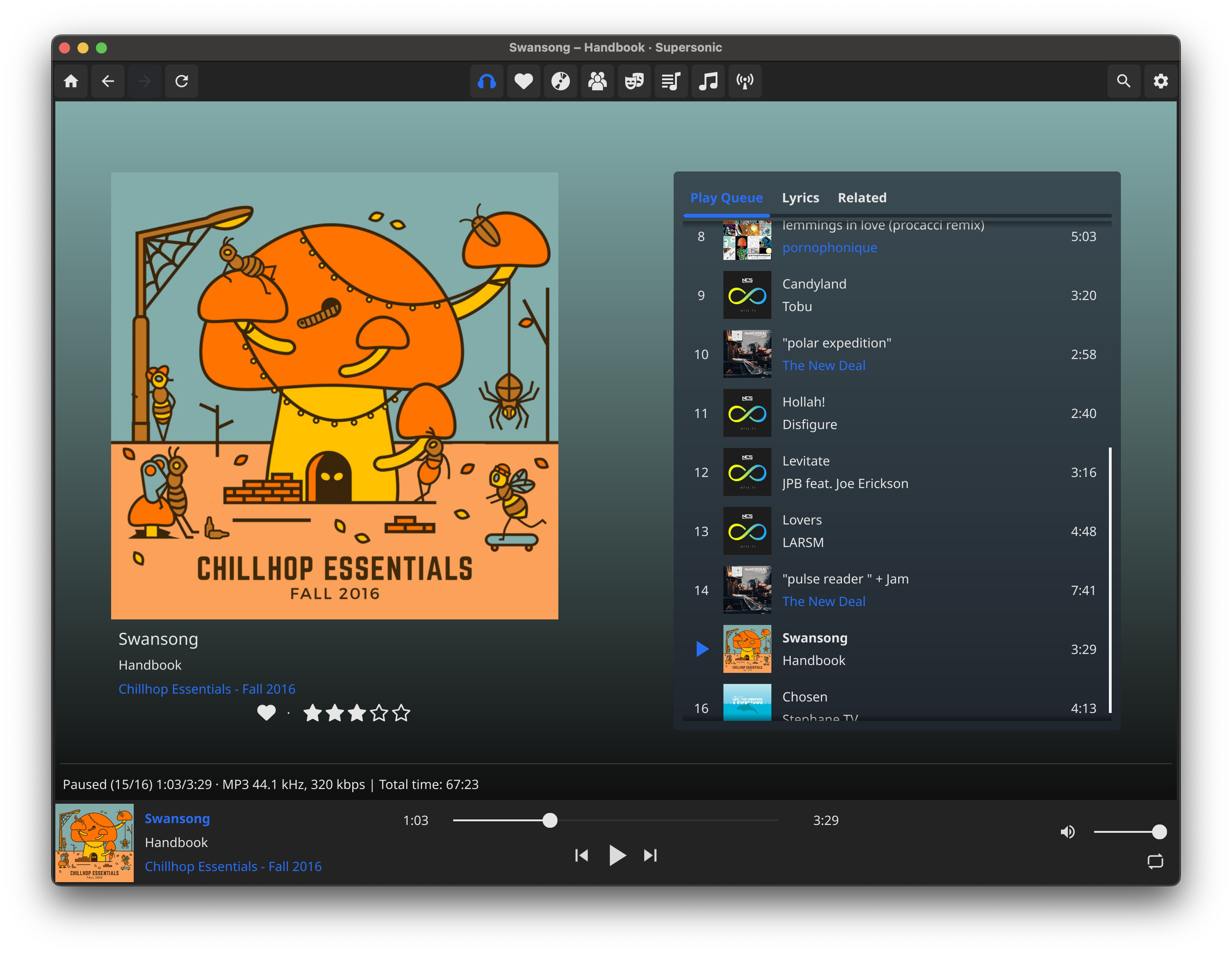
Supersonic is a lightweight cross-platform desktop client designed for self-hosted music servers such as Subsonic, OpenSubsonic, and Jellyfin. It offers a fast, native user interface with infinite scrolling, built-in dark and light themes, and seamless integration with popular music services.
Key features include high-quality gapless audio playback powered by MPV, waveform seekbar functionality for precise navigation, and a 15-band graphic equalizer for customizable sound quality. Supersonic also supports media key controls via MPRIS and integrates with uPnP/DLNA devices for flexible playback options. Users can scrobble plays to their server, browse artist radio, and manage multiple music servers from a single interface.
Ideal for musicians, audiophiles, and tech enthusiasts who value professional-grade audio features, Supersonic is perfect for anyone seeking a feature-rich yet lightweight desktop client to enhance their self-hosted music experience. Available on Windows, macOS, and Linux, it provides a consistent and intuitive platform for managing and enjoying music collections.
README
Supersonic
A lightweight cross-platform desktop client for Subsonic and Jellyfin music servers.
MPRIS, Windows SMTC, and Mac OS media center integration for media key and desktop control
Built-in 15-band graphic equalizer
Scrobble plays to server, with configurable criteria
Add and switch between multiple servers
Primary and alternate server hostnames, e.g. for internal and external URLs
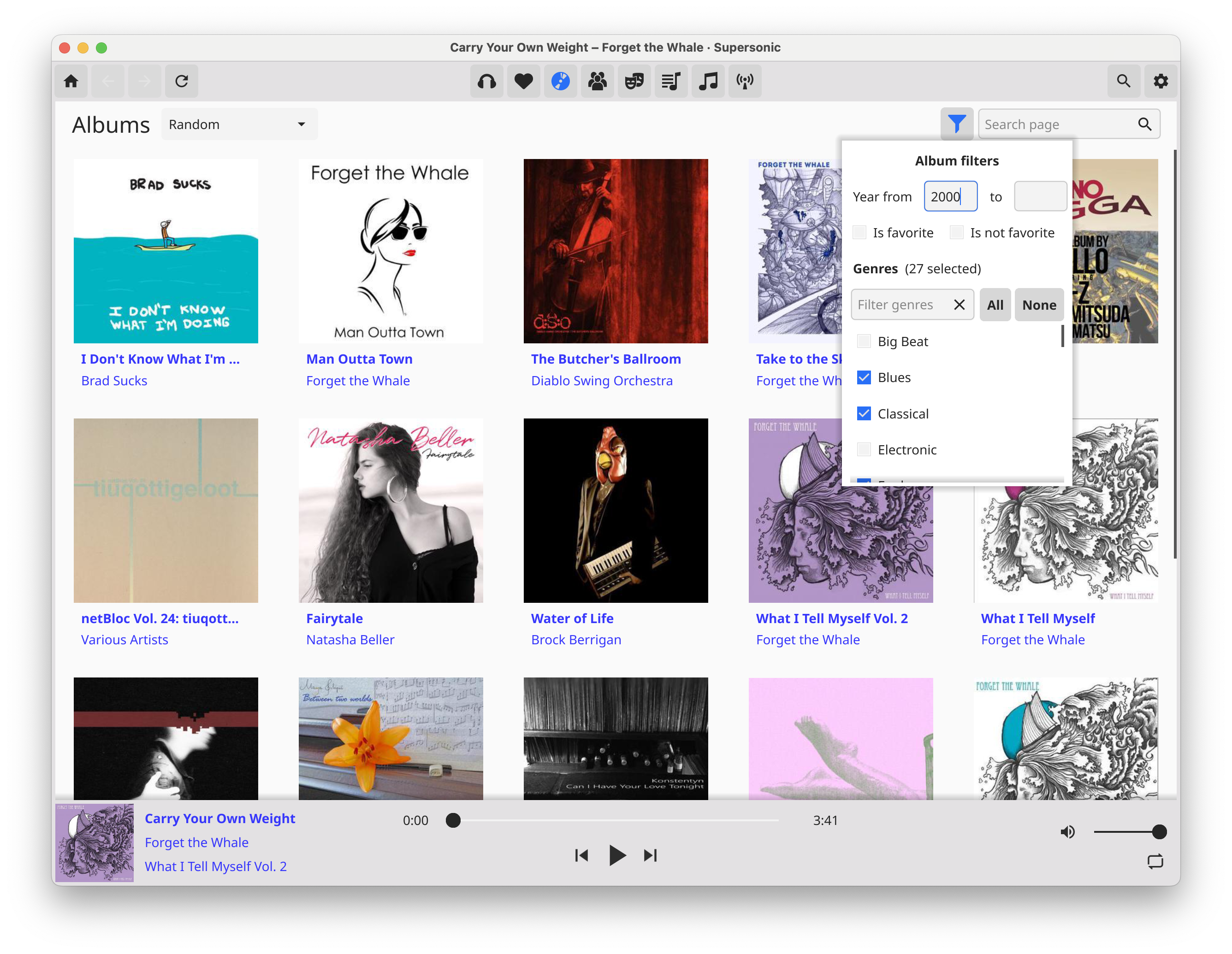
Set filters in albums browsing view
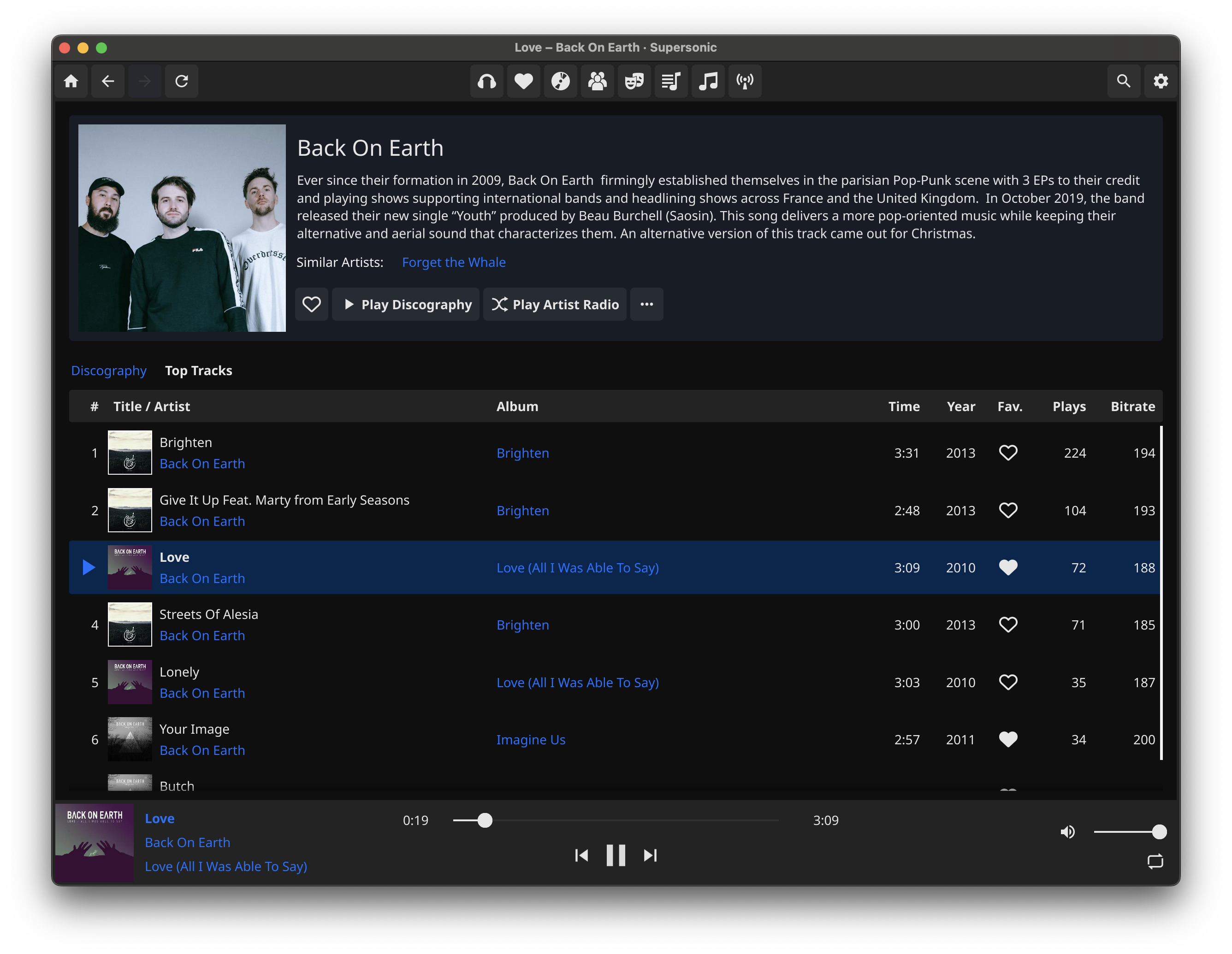
Play "artist radio" (mix of songs from given artist and similar artists, depends on your server's support)
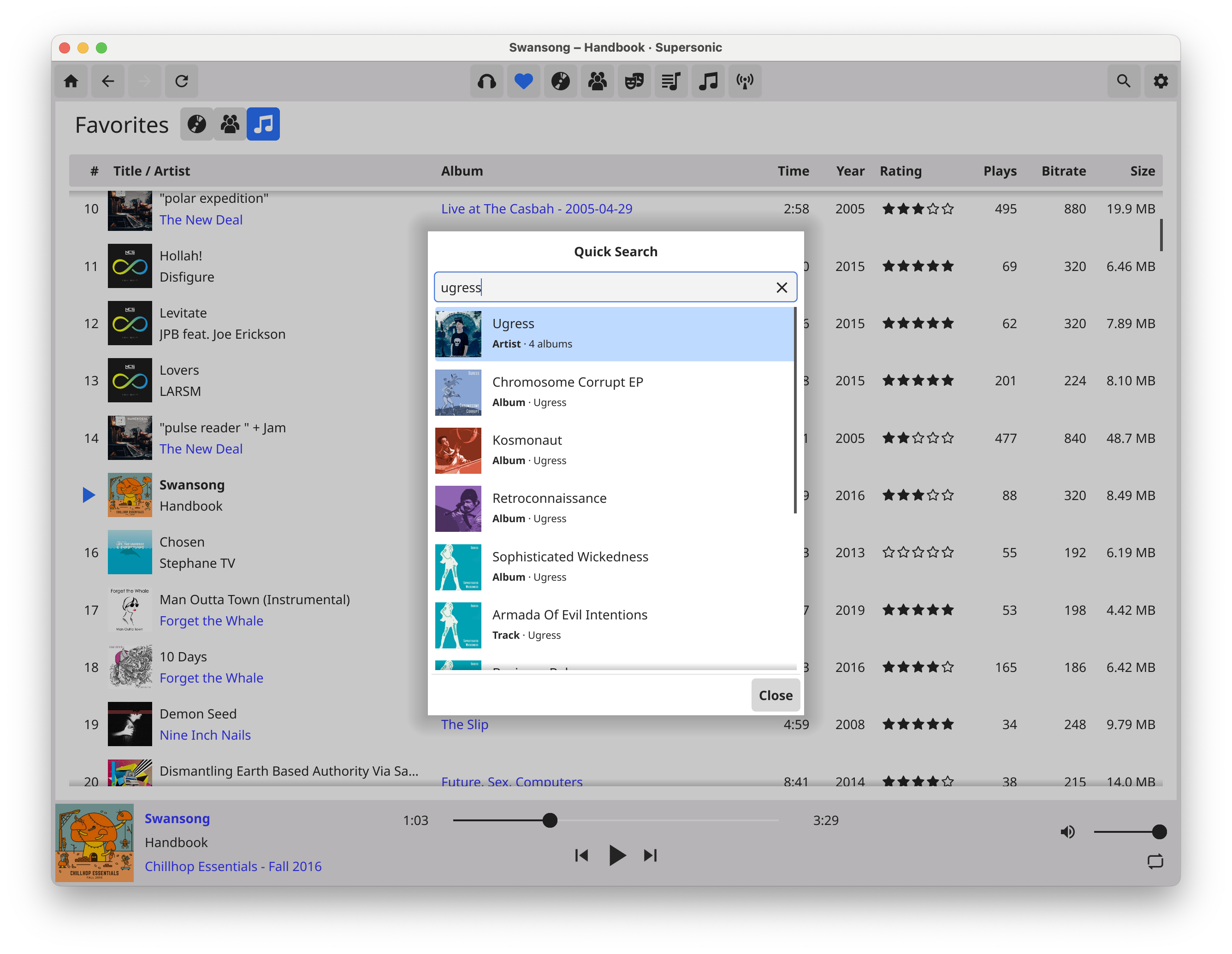
Sort tracklist views by column and configure visible tracklist columns
Download songs, albums or playlists
Shuffle and repeat playback modes (partial; shuffle album, playlist, artist radio, random songs; repeat one/all)
Lyrics support
Internet radio station support (Subsonic)
Cast to uPnP/DLNA devices
Server jukebox control (planned)
Browse by folders (planned)
Offline mode (eventually planned)
iOS/Android support (maybe eventually planned)
Installation
Platform-specific installation instructions are listed below. In addition to the most recent stable release, you can also download the latest build from the main branch via the Actions tab to get unreleased features and bug fixes (you must be signed in to Github to do this). If you prefer to build from source, then see the build instructions for your platform.
Linux
AppImage: On the latest release page, you can download an AppImage package with the MPV library bundled.
Tested OSes:
ubuntu 22.04+
debian 12+
fedora 42+
(Debian) .tar.xz: The.tar.xz builds from the Releases page support Debian-based distros. You must have libmpv installed on your system, and choose the correct release build (libmpv2 or libmpv1) based on which is available in your distro's package manager. On apt-based systems, run sudo apt install libmpv1 (or libmpv2) if it is not already installed. To install the Linux release build, after ensuring the required libmpv is installed, extract the .tar.xz bundle and run make user-install or sudo make install.
Packages: On Linux, Supersonic is available as a Flatpak. (Thank you @anarcat!) Third-party packages are also available for Arch, Nix OS, and Fedora (COPR). Please note that the Flatpak package currently does not support CJK fonts as the sandboxing breaks font lookup.
Windows
Download the latest release. You can choose between the installer, or a standalone zip file which can be extracted and run without requiring system installation.
Mac OS
Supersonic is available on Homebrew via a custom brew tap, or via downloading the .app bundle from the Releases page.
The xattr -r -d com.apple.quarantine command is important because Supersonic is distributed without having been notarized, and therefore will not run without this.
You should also re-run that xattr command when upgrading in future.
To install the downloaded .app bundle from the Releases page, unzip and then drag Supersonic.app to the Applications folder.
:warning: Apple Silicon (M1 and newer) Macs: You will have to remove the "quarantine bit" that Mac will automatically set, being an application downloaded from the internet. After copying the .app bundle to your Applications folder, in the terminal run xattr -r -d com.apple.quarantine /Applications/Supersonic.app
Building from source
Build instructions for Linux, Windows, and Mac are listed here