Clone Windows apps with independent sessions.
Run the same app several times, each clone signed in to a different account
(three Chromes, two Discords, two Telegrams…). WhatsApp works too — the classic
Electron build; the Microsoft Store build needs a separate Windows account.





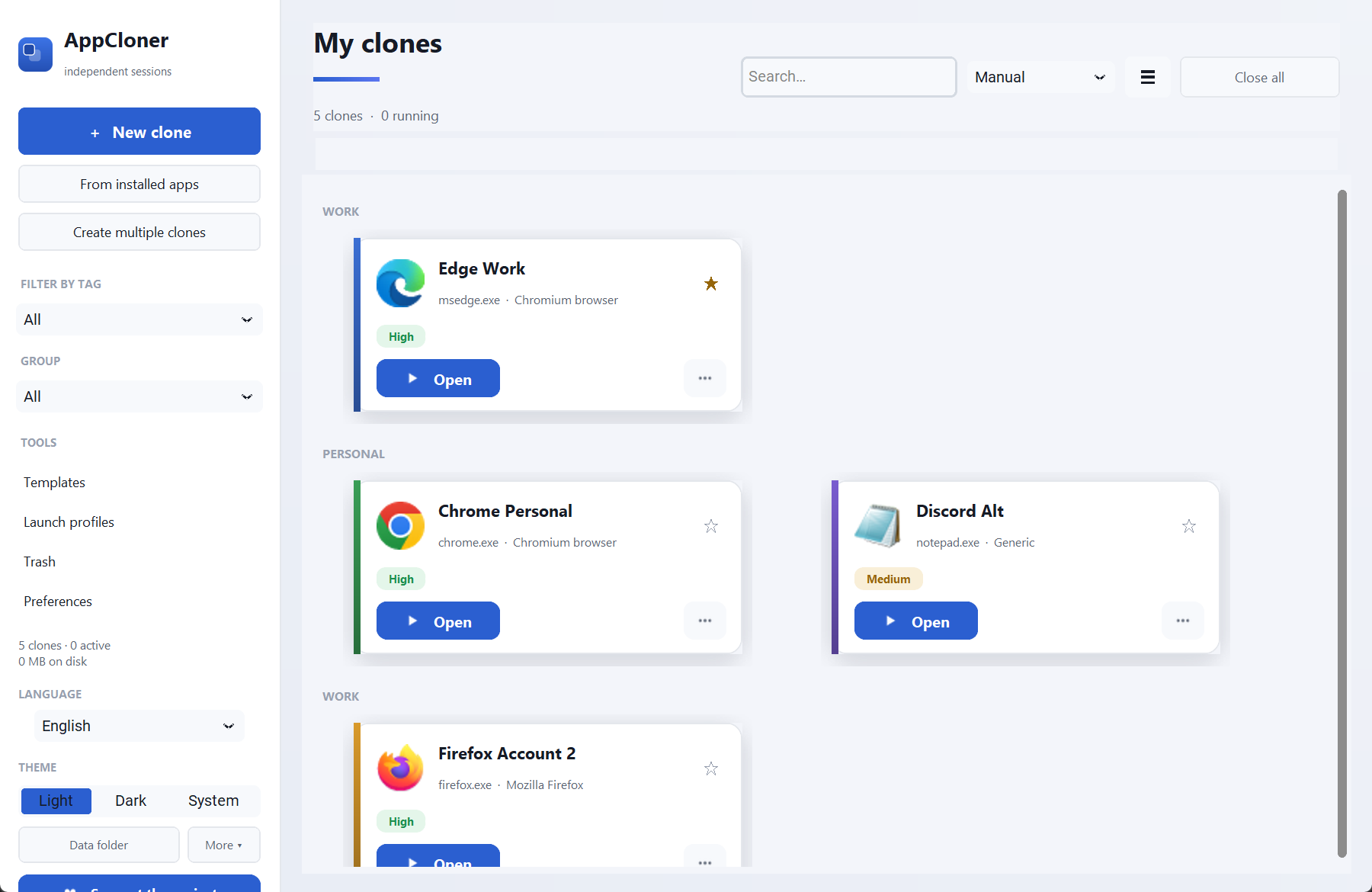
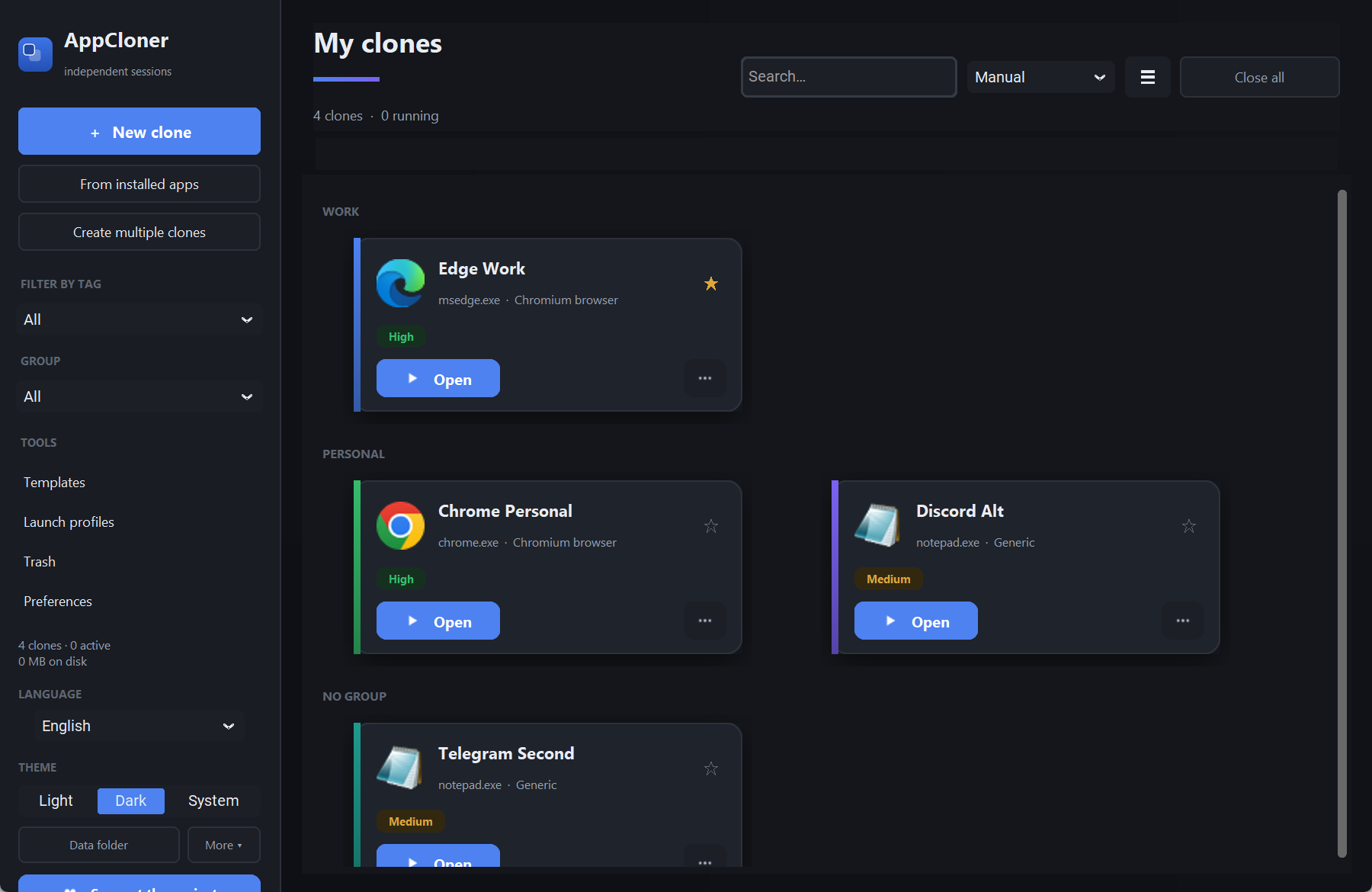
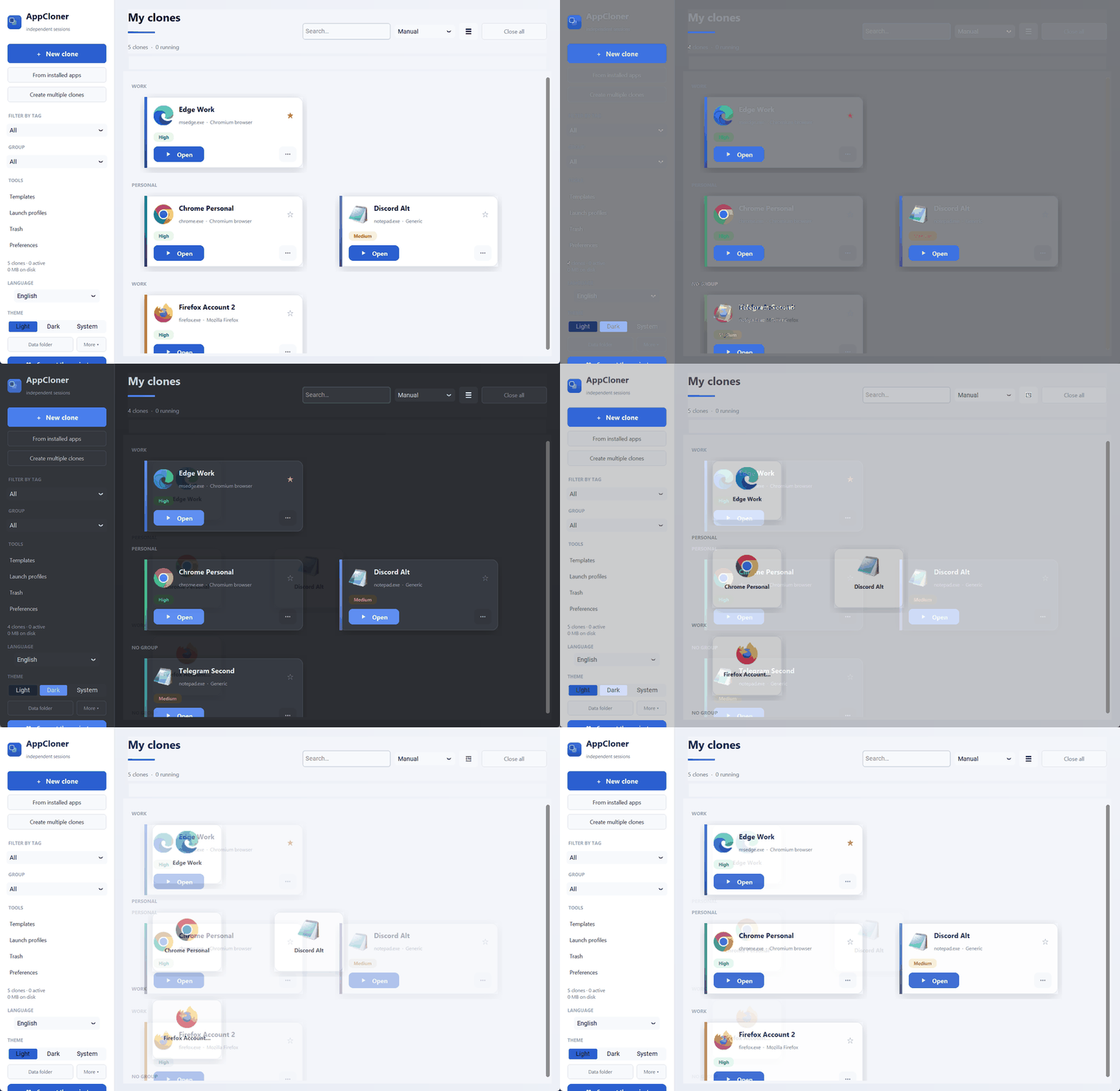
Professional UI with light / dark / system themes, soft shadows, and 6 languages
(English, Español, 中文, Português, Français, Deutsch). Default language: English.
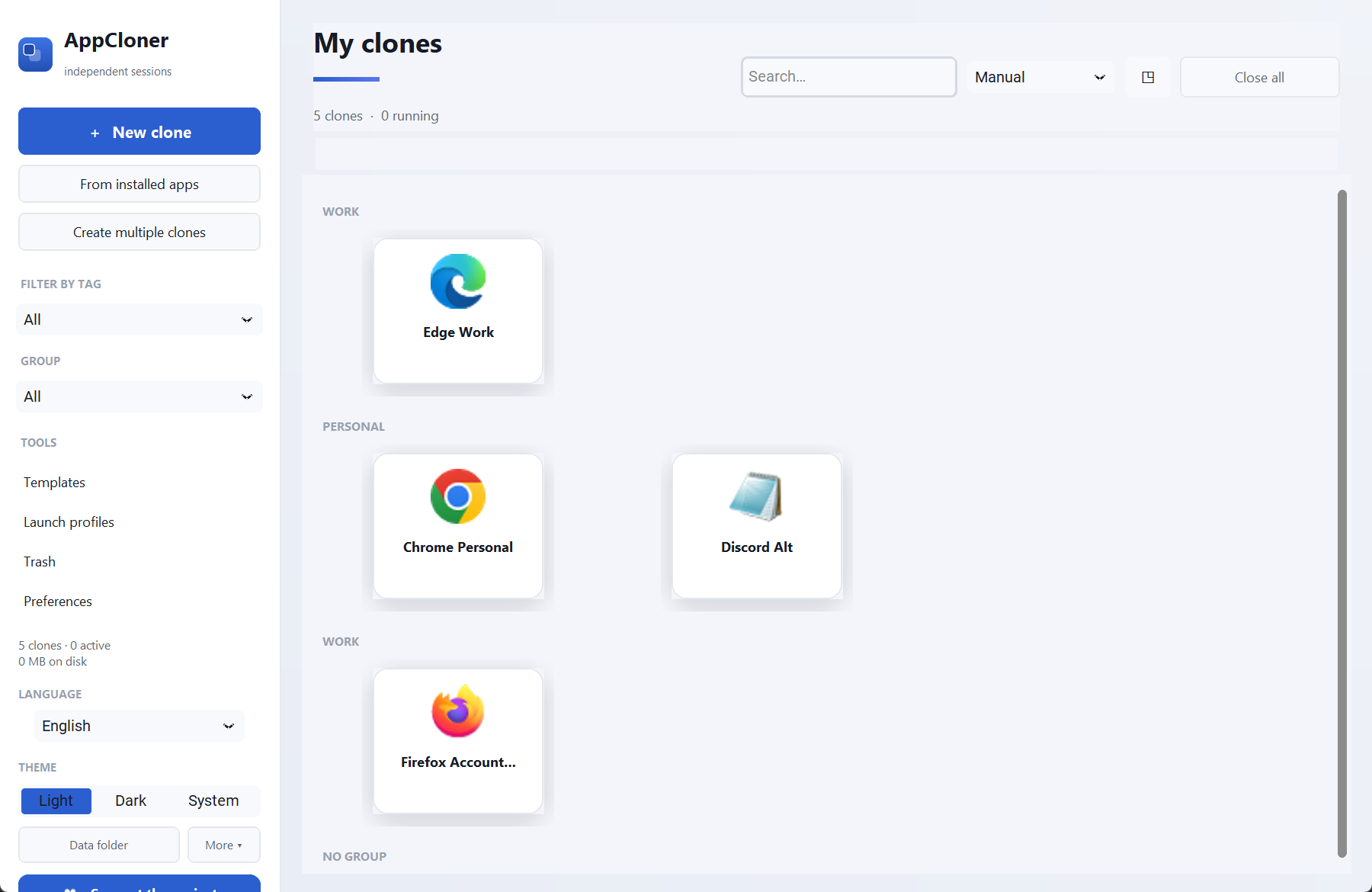
Screenshots
Install
- Portable: download
AppCloner.exe from the latest release.
No Python or install needed — just double-click.
- No
.exe? Run it with Python. Download the source (the
AppCloner-vX.Y.Z-python.zip attached to the release, or the repository zip),
unzip it, and double-click AppCloner.py. It checks your Python, offers to
install the two packages it needs with pip into your user folder, hides the
console and opens the app. Needs Python 3.10 or newer. This is the way in when
the browser blocks the executable, the antivirus deletes it, SmartScreen warns
about an unsigned binary, or the network refuses .exe downloads.
- Installer: an
AppCloner-Setup.exe (creates shortcuts) is coming soon.
- winget (once published):
winget install EazyHood.AppCloner.
It keeps itself up to date. The portable .exe checks for new releases,
downloads them in the background, verifies the SHA256 published with the release,
and installs it when you close AppCloner — never underneath you while you are
working. There is a Restart now button if you would rather not wait, and an
Install updates automatically switch in Preferences. Installed through winget or
into Program Files, it does not touch itself and tells you how to update instead.
Requirements: Windows 10/11 (64-bit). Portable .exe is ~33 MB.
Before you run it:
- The binary is unsigned, so Windows SmartScreen may warn on first run
("More info" → "Run anyway").
- Because it's a single-file PyInstaller build, some antivirus engines flag it as
a false positive. The source is fully here — build it yourself if you prefer
(see From source / build), and check the release with
VirusTotal if in doubt.
- Verify your download against the
SHA256SUMS.txt published with each release.
The built-in updater does exactly that, and refuses to install anything whose
hash does not match.
- None of this applies to the Python route above: there is no binary to flag.
Features
Duplicating a clone
- One click on the card, or Ctrl+D. Names continue the numbering
("Claude cuenta 4" gives "Claude cuenta 5"), and each copy gets a different
colour so two clones of one app are not identical in the grid.
- Copy the session of the original, so the new clone opens already signed in
to the same account. Single-instance locks and cache are left behind on purpose
(that is why copying a profile folder by hand usually breaks); the original has
to be closed, checked per profile, not per app.
- Several copies at once, with the names shown before anything is created.
- Move an account between two existing clones: clone menu, Duplicate,
Copy another clone's session into this one.
- Real progress bar with cancel, because a browser profile is gigabytes.
Basics
- Create, edit, duplicate, archive and delete clones (with a Trash / restore).
- Add "from installed apps" (including Microsoft Store apps).
- Paste an app to clone it (Ctrl+V) — takes "Copy as path" and a plain
Ctrl+C on the icon, and resolves shortcuts to the real executable.
- Create several clones at once; templates for repeated setups.
- Grid / list / icon views; search over name, executable, tags, notes and
group; sort, filters, favorites.
- Shortcuts on the desktop, Start menu and startup; "Clone with AppCloner" in the
File Explorer right-click menu.
Isolation
- By folder (
--user-data-dir / profile) for browsers and Electron apps.
- By environment redirection for native apps — and if the app is installed inside
%LOCALAPPDATA%/%APPDATA%, its install folder is re-attached with a junction so
it doesn't lose its own files (see Why clones used to break).
- Microsoft Store (MSIX) apps are activated through their package identity, so they
keep their capabilities instead of being started as a bare
.exe.
- A separate WebView2 data folder per clone, for apps that embed a web panel.
- Sandboxie-Plus mode (a separate box per clone) and "another Windows account"
for hard apps (Steam, Epic, Spotify, apps that store the session in the registry).
- A checker that tells you honestly whether the clone has its own session, and
says so plainly when folder-based checking can't prove anything.
When something goes wrong
- Startup is watched: if a clone closes right away you get the reason, with its exit
code translated (missing DLL, needs administrator, access denied…).
- It distinguishes "died" from "handed off to a window that was already open" — the
most common case, and the one that used to be reported as success.
- Revisar y reparar (clone menu) fixes the target path, re-extracts the icon,
rebuilds the shortcuts and tells you which isolation method is in use.
Power
- Proxy and user-agent per clone (browsers).
- Access PIN to lock clones (asked in the manager), profile encryption (EFS),
guest (ephemeral) clone.
- Launch profiles (open a group of clones with one click), scheduled openings.
- Open on a specific monitor and remember window position/size.
- Backup a clone (with its session) and restore it.
- Stats: RAM, process count and total usage time per clone; the details sheet
also shows which clone this one was duplicated from and how many clones share
the same app.
- System tray, native notifications, update notice.
- Export/import the whole configuration.
- Automatic updates with SHA256 verification;
appcloner --update from the
command line.
- 6 languages and accessibility (UI scale, high contrast, reduce motion).
- Shortcuts: Ctrl+N new, Ctrl+D duplicate, Ctrl+V paste an app,
Ctrl+A select all, Ctrl+F search, F5 refresh, Ctrl+Q close all,
Ctrl+, preferences, Del delete selection.
See the per-app compatibility table.
How isolation works
The original app is never copied or modified: each clone launches with its own
data space. It's a convenience for separating accounts, not a security boundary.
Some apps (session in the registry, non-Electron Store apps, global single
instance) need Sandboxie mode or a separate Windows account; AppCloner tells you.
Mind each app's terms of use.
Why clones used to break
If you used AppCloner before v4 and hit clones that died, lost features, or showed
the wrong icon, these were the actual causes — all fixed now:
| Symptom | Root cause |
|---|
| The clone opens and closes by itself | The wrong executable was launched. Squirrel apps (Discord, GitHub Desktop, Claude) put a ~350 KB stub in the install root, and their shortcuts point at Update.exe. Both just relaunch the real binary and exit, so what AppCloner watched died immediately. |
| The clone opens but shares the original account | Same cause: the isolation flags were chosen from the real exe and then handed to the stub, which ignores them. |
| A Store app doesn't open, or opens crippled | Its .exe was started directly from the protected WindowsApps folder, losing the app's package identity. |
| The clone is missing features the app has | The app was installed inside %LOCALAPPDATA%, and redirecting that variable hid the app's own installation from itself. |
| Two clones share one login in an in-app web panel | WebView2's data folder wasn't isolated. |
| The icon is blurry, generic, or a letter | PrivateExtractIconsW was requested from the wrong DLL, so extraction failed on every machine and silently fell back. Store-app icons live in the package manifest, which was never read. |
| The desktop shortcut shows the Python or AppCloner icon | Windows only draws .ico in a shortcut's IconLocation, and the cached icon was a PNG, so it fell back to the launcher's own icon. |
Full detail in the changelog.
From source / build
pip install -r requirements.txt and python -m appcloner. For the .exe:
pip install pyinstaller and run build.bat (output in dist\AppCloner.exe).
Tests: pytest -q. Lint: ruff check appcloner tests.
Contributing
Compatibility reports, app recipes and translations are welcome — see
CONTRIBUTING.md.
Support
AppCloner is free to use. If it helps you, consider a star on GitHub or a
donation via Ko-fi (or
GitHub Sponsors). There are no paywalls
or locked features — everything above is free.
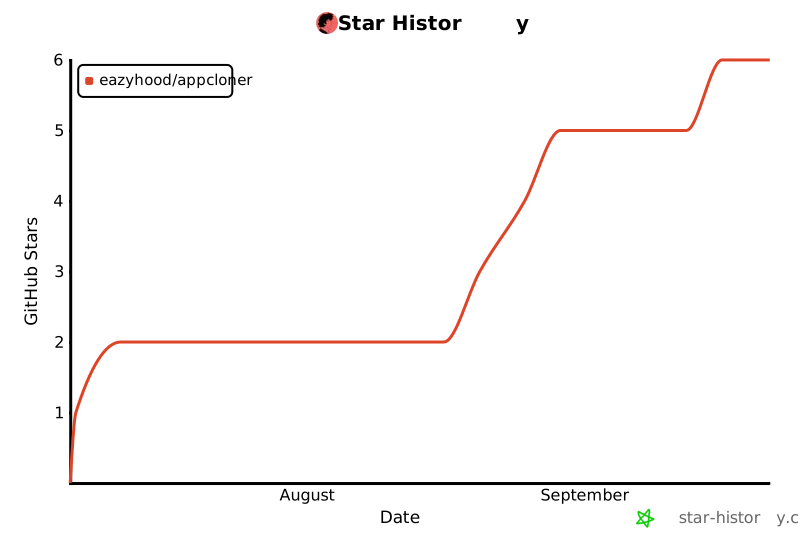
Star history
If you find AppCloner useful, a ⭐ helps others discover it.
License & ownership
Copyright © 2026 EazyHood — sole author and owner. All rights reserved.
You may use and share this software for free, but you may not sell it. See
LICENSE.