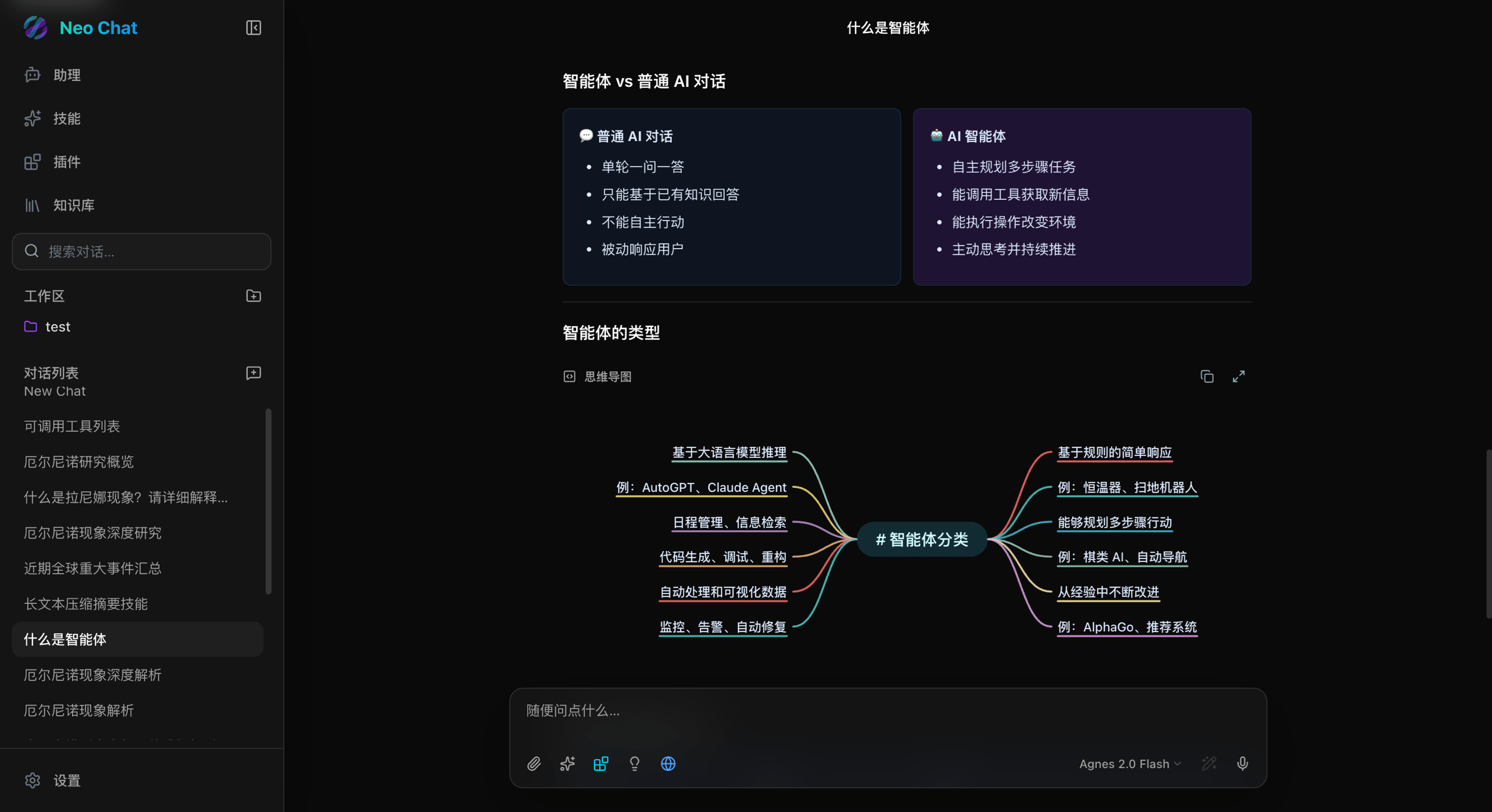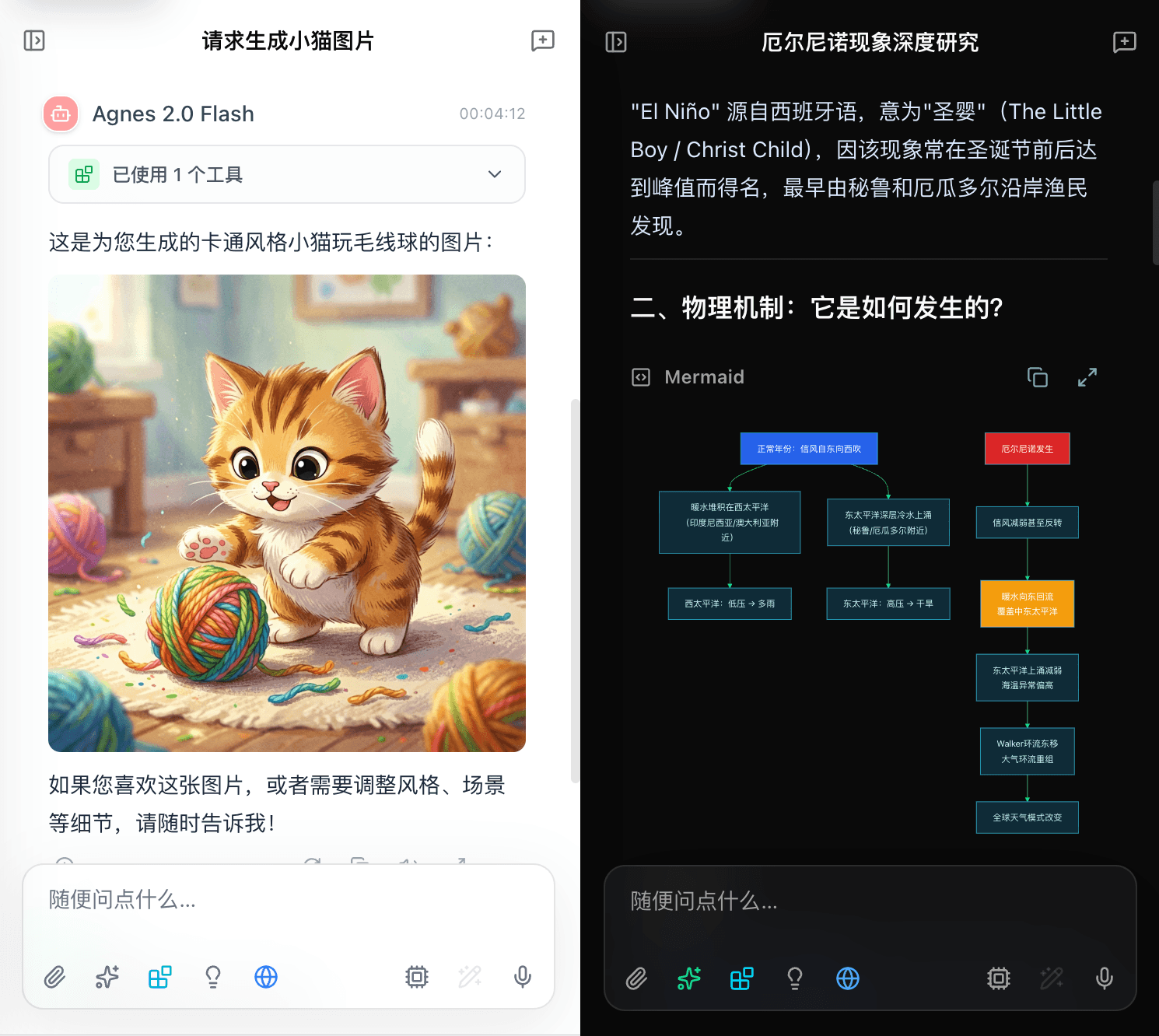
Gemini Next Chat is a software tool designed to deploy private Gemini applications effortlessly, enabling users to leverage advanced AI capabilities with ease. It supports popular Gemini models such as Gemini 1.5 Pro, Gemini 1.5 Flash, Gemini Pro, and Gemini Pro Vision, providing robust functionality for various use cases.
Key Features:
One-click deployment of Gemini applications, simplifying setup and integration.
Cross-platform support, allowing seamless operation on Windows, MacOS, and Linux.
Advanced multimodal capabilities, including image recognition and voice interaction.
Extensive plugin system with built-in tools like Web search, Web reader, Arxiv search, and Weather plugins.
Efficient client design that enhances productivity by staying in the menu bar.
Privacy-focused architecture, ensuring all data remains locally stored.
Ideal for developers, researchers, and businesses seeking to integrate Gemini AI into their workflows without high costs or complexity. By offering a user-friendly interface and powerful features, Gemini Next Chat streamlines the development and deployment of AI-driven applications while maintaining security and efficiency. Install via winget for quick setup and start building your private Gemini application today.
README
Neo Chat
A local-first AI chat workspace for models, agents, skills, plugins, search, RAG, voice, memory, and artifacts.
Neo Chat is a self-hostable, local-first AI chat application built with Next.js, React, TypeScript, and Zustand. It brings multi-provider chat, assistant presets, text-only Skills, OpenAPI-style plugin tools, remote streamable HTTP MCP servers, web and local global search, knowledge-base RAG, versioned backup and restore, local memory, voice, generated media, rich message rendering, citations, and editable artifacts into one clean workspace.
It is designed for people who want the power of modern AI workspaces without giving up local data ownership. Chat history, workspace metadata, skills, plugin configuration, memories, search indexes, and files stay in the browser by default; server routes act as controlled proxies for model providers, web search, RAG, document parsing, voice, plugin and MCP execution, and deployment health.
v2.3.0 Highlights
Added a local global search center for active conversation branches,
attachments, workspaces, knowledge, and memories, with filters, incremental
indexing, direct navigation, and Ctrl/Cmd + K access.
Added version 3 ZIP backup and transactional restore for local app data and
referenced OPFS files, with integrity checks, rollback recovery, legacy
version 2 JSON compatibility, and deliberate credential exclusion.
Expanded knowledge-base recovery with preserved originals, editable extracted
content, separate storage/index states, and retry, reparse, reindex,
cancellation, reconciliation, and per-file concurrency protection.
Added optional destructive-tool approval with allow-once or deny decisions,
plus risk floors, argument redaction, stable function fingerprints,
non-destructive chat-scoped approvals, and fail-closed server validation for
plugin and MCP execution.
Made marketplace and deployment failures visible, unified effective search
capability, kept Firecrawl usable without an API key, and supported trusted
user-configured HTTP/private-network endpoints in self-hosted deployments.
Added native Anthropic Messages API support through the official SDK.
Added remote streamable HTTP MCP server discovery and installation from the
official MCP Registry, with plugin-market management, authentication, and
server-side tool execution. This release intentionally supports remote MCP
servers only.
Strengthened provider requests, API route policy, context budgeting,
outbound URL safety, plugin registration, and Worker deployment validation.
Reconstructed the chat shell, composer, message rendering, and chat service
internals into smaller modules while preserving existing workflows.
Fixed known issues across chat history, tool calls, provider streams, media
and exports, memory/RAG/search/voice flows, settings, and accessibility.
v2.1.0 Highlights
Rebuilt System Settings with clearer grouped controls, an About panel, deployment health visibility, and local data export/reset actions.
Added native model image generation/editing with ordered mixed text/image output blocks and OPFS-backed image display caching.
Expanded built-in plugin media tools with Agnes/Gemini image processing, separate OpenAI-compatible Images API and OpenAI Responses image processing plugins, plugin-level Base URL/Model ID controls, image count parameters where supported, compact image tool results, and Agnes image/video processing upgrades.
Added thinking intensity controls for reasoning-capable Google/Gemini and OpenAI-compatible models.
Added Japanese localization for the app shell, SEO metadata, assistant locale routing, voice language handling, and the public Skills catalog.
Hardened hosted deployments with API request proof, shared-store checks, service health coverage, safer URL/secret handling, and Cloudflare Worker command fixes.
Added changelog-driven GitHub Release automation and a fork-only upstream sync workflow.
Features
Multi-provider chat with Google, Anthropic, OpenAI, and OpenAI-compatible endpoints.
Native image generation and image editing for models whose metadata exposes image output/input, with ordered mixed text/image message blocks and OPFS-backed Blob URL display caching.
Assistant presets from the LobeHub agent registry plus local custom assistants.
Text-only Skills with localized public catalogs, install/uninstall flows, local edits, custom skills, auto-selection, and workspace presets.
OpenAPI-based plugin tools plus remote streamable HTTP MCP servers, with per-plugin authentication, server-side execution, transport-derived risk floors, and optional confirmation for destructive calls.
Built-in tools for web reading, weather, Unsplash search, Agnes/Google image processing, OpenAI-compatible image processing, OpenAI Responses image processing, and Agnes video generation. Agnes image processing supports image-to-image edits, and Agnes video generation supports public image URL to video plus plugin-level model IDs. Image processing plugins remain separate from native model image output.
Web search through Google native Google Search, OpenAI Web Search, or external providers such as Tavily, Firecrawl, Exa, Bocha, and SearXNG.
Local global search across active chat branches, attachments, workspaces, knowledge, and memories, with source/date/role filters and direct result navigation.
Knowledge-base RAG with preserved original files, editable extracted content, Mineru/LlamaParse document parsing, optional vector indexing, and recovery actions for failed parsing or indexing.
Versioned ZIP backup and transactional restore for local metadata and referenced OPFS files, excluding credentials and external service data.
Local memory with optional memory search, background extraction, and dream consolidation.
Voice input and output through browser APIs, ElevenLabs, Mimo, or compatible configured providers.
Rich message rendering for Markdown, safe inline HTML visual blocks, GFM tables, math, code highlighting, Mermaid diagrams, mind maps, citations, reasoning, tool calls, images, audio, and artifacts.
Local BYOK encryption for user-entered provider, plugin, search, RAG, and voice secrets.
Deployment health checks for BYOK, access password, shared stores, default model, search, RAG, and voice readiness.
Docker and Cloudflare Workers deployment paths.
Screenshots
Quick Start
Requirements
Node.js 22
pnpm 10.30.3
Run Locally
pnpm install
pnpm dev
Open http://localhost:3000, then configure at least one model provider in Settings.
For deployment-wide defaults, copy the environment template:
cp .env.example .env.local
Most settings can be managed in the browser. Server environment variables are useful when you want a shared default provider, hosted deployment safety, access password protection, shared runtime stores, or managed defaults for search, RAG, document parsing, voice, memory, and HTML visual rendering.
Deployment
Docker Compose
docker compose up --build
The compose file publishes Neo Chat on http://localhost:3000 and uses local/self-hosted safety defaults. For production Docker deployments, set stable BYOK values, use shared stores for hosted or multi-instance deployments, and enable TRUST_PROXY_HEADERS only behind a proxy that strips spoofed forwarded headers.
The Docker workflow builds pull requests and publishes main / v* tags to GitHub Container Registry:
ghcr.io/u14app/neo-chat:latest
Vercel
Import the repository as a Next.js project. Vercel can use the framework preset
and package manager detection from pnpm-lock.yaml and the packageManager
field, so the project does not need a custom output directory.
Store deployment passwords, provider keys, BYOK material, and shared store
credentials as Vercel environment variables with the appropriate Production,
Preview, or Development scope. Do not commit these values to the repository.
When a NEXT_PUBLIC_* value affects metadata or generated public links, set it
for the environments that build those deployments.
Workers should run in hosted mode and use public HTTPS upstreams. When using
Cloudflare Workers Builds, use separate build and deploy commands so the
OpenNext build output exists before deployment:
--keep-vars preserves runtime variables and secrets configured in the
Cloudflare dashboard instead of replacing them with only the values committed in
wrangler.jsonc.
Production Workers should configure runtime variables in the Cloudflare
dashboard under Settings -> Variables and Secrets. Use plain variables for
non-sensitive deployment defaults:
Use secrets for deployment passwords, provider keys, BYOK material, and shared
store credentials:
wrangler secret put BYOK_PRIVATE_KEY_PEM
wrangler secret put BYOK_KEY_ID
wrangler secret put UPSTASH_REDIS_REST_URL
wrangler secret put UPSTASH_REDIS_REST_TOKEN
wrangler secret put ACCESS_PASSWORD
For Cloudflare Workers Builds, also add build-time variables under
Settings -> Builds -> Variables and Secrets when a value must be available
during next build, especially NEXT_PUBLIC_* values. Runtime variables are
not available to the build step unless they are also configured there.
Do not commit personal API keys or deployment secrets to wrangler.jsonc.
Deployment-level provider keys such as DEFAULT_PROVIDER_API_KEY are shared by
everyone using that Worker instance; leave them unset if users should provide
their own keys in the browser.
Core settings, provider records, selected models, and provider API keys are stored in browser localStorage.
Chat metadata, messages, app settings, installed plugins, installed/custom skills, skill catalog caches, assistants, knowledge metadata, and local memories are stored in IndexedDB through localforage.
Uploaded chat and workspace files, knowledge originals and extracted text, and image display-cache copies are stored in browser OPFS. Runtime blob: URLs remain temporary; version 3 ZIP backups bundle referenced app-owned OPFS files while excluding credentials and remote service data.
User-entered secrets are encrypted in the browser as BYOK envelopes before being sent to API routes.
Important server-side settings:
# Access gate
ACCESS_PASSWORD="your-access-password"
# Stable BYOK server key for production
BYOK_PRIVATE_KEY_PEM="-----BEGIN PRIVATE KEY-----\n...\n-----END PRIVATE KEY-----"
BYOK_KEY_ID="prod-2026-07"
BYOK_ALLOW_EPHEMERAL_KEY="false"
# Deployment safety
DEPLOYMENT_MODE="local" # or hosted
ALLOW_LOCAL_NETWORK_PROXY=""
# Shared short-lived state for hosted or multi-instance deployments
RATE_LIMIT_STORE="upstash"
DOCUMENT_PARSE_JOB_STORE="upstash"
PLUGIN_REGISTRY_STORE="upstash"
UPSTASH_REDIS_REST_URL="https://..."
UPSTASH_REDIS_REST_TOKEN="..."
# Comma-separated model IDs
DEFAULT_PROVIDER_MODELS="gpt-5.5,gpt-5.4-mini"
# JSON string array
DEFAULT_PROVIDER_MODELS='["gpt-5.5","gpt-5.4-mini"]'
# JSON object array with optional display names, capability aliases, and modalities
DEFAULT_PROVIDER_MODELS='[{"id":"gpt-image-2","name":"GPT Image 2","capabilities":["image_generation"]},{"id":"gemini-3.1-flash-image","modalities":{"input":["text","image"],"output":["text","image"]}},"gpt-5.4-mini"]'
For JSON object entries, name is optional and falls back to id.
capabilities accepts aliases such as vision, attachment, reasoning,
tool_call, image_generation, image_output, and image_editing.
Explicit modalities.input / modalities.output are preferred when present.
Search, RAG, document parsing, and voice defaults:
DEFAULT_SEARCH_PROVIDER="firecrawl"
# Firecrawl search works without an API key; set one for higher rate limits.
DEFAULT_SEARCH_API_KEY=""
DEFAULT_SEARCH_BASE_URL="https://search.example"
DEFAULT_RAG_BASE_URL="https://rag.example"
DEFAULT_RAG_TOKEN="rag-token"
DEFAULT_RAG_TOP_K="10"
DEFAULT_RAG_CHUNK_SIZE="512"
DEFAULT_RAG_NAMESPACE="default"
DEFAULT_DOCUMENT_PARSE_PROVIDER="mineru"
DEFAULT_MINERU_API_TOKEN=""
DEFAULT_LLAMA_PARSE_API_KEY="llama-parse-key"
DEFAULT_VOICE_PROVIDER="elevenlabs"
DEFAULT_ELEVENLABS_API_KEY="elevenlabs-key"
DEFAULT_ELEVENLABS_STT_MODEL="scribe_v2"
DEFAULT_ELEVENLABS_TTS_MODEL="eleven_flash_v2_5"
DEFAULT_ELEVENLABS_TTS_VOICE_ID="bIHbv24MWmeRgasZH58o"
DEFAULT_MIMO_API_KEY="mimo-key"
DEFAULT_MIMO_STT_MODEL="mimo-v2.5-asr"
DEFAULT_MIMO_TTS_MODEL="mimo-v2.5-tts"
DEFAULT_MIMO_TTS_VOICE_ID="mimo_default"
The app keeps durable user data in browser storage whenever possible. API routes provide:
provider request normalization and streaming;
BYOK decryption on the server side;
URL safety gates for proxied upstreams;
plugin execution through registered plugin IDs and function names;
deployment health reporting through /api/health;
hosted-mode checks for shared stores and fixed-service network boundaries.
Skills, Plugins, Search, RAG, and Voice
Skills are text-only prompt-context modules. The app loads localized metadata catalogs from public/data/skills, fetches full skill definitions only when needed, and stores installed, edited, and custom skills locally. Active skills can be selected manually, inherited from workspace presets, or auto-selected for a message.
Plugins are executable tools installed from OpenAPI manifests, built-in definitions, or remote streamable HTTP MCP servers discovered from the official MCP Registry. Enabled plugin functions are exposed to compatible models as tools, then executed by the server-side plugin route. MCP v1 support is remote-only: stdio, npm, Docker, local process transports, and OAuth login flows are intentionally out of scope. User-configured MCP server URLs may use HTTP or HTTPS and may target localhost or private networks in either deployment mode; the official Registry remains HTTPS-only. Built-in image processing plugin results stay in the tool details and compact conversation history, so the model can decide whether and how to reference generated or edited images in its follow-up message. OpenAI-compatible Images API and OpenAI Responses image processing are separate plugins so their credentials and activation can be managed independently. Supported built-in media plugins expose plugin-level API Base URL and Model ID fields, optional image count parameters, Agnes image-to-image editing, and Agnes video generation from a public HTTPS image URL while keeping Agnes video as the explicit create_video / get_video_result two-step flow. Tool-call orchestration uses a high but bounded loop limit to avoid runaway recursive calls while still allowing multi-step tasks.
Search can run through Google native Google Search, OpenAI Web Search, or external providers for other model families including Anthropic. Firecrawl's public service works without an API key; a key only raises its request rate. The separate local global search center indexes active chat branches, attachments, workspaces, knowledge, and memories in browser memory and excludes reasoning, tool payloads, and credentials.
Knowledge-base RAG preserves uploaded originals separately from editable or indexable extracted text, optionally parses documents with Mineru or LlamaParse, and can index chunks into an external vector service. Failed files can be retried, reparsed, reindexed, cancelled, or reconciled without discarding a usable original.
Voice workflows support browser speech APIs and configured external providers. Set DEFAULT_VOICE_PROVIDER to elevenlabs or mimo to enable a server default; leaving it empty keeps browser-native speech as the default. Empty default model values disable the matching STT or TTS capability, and the UI can store user-specific secrets locally.
Deployment health is available from Settings and /api/health. It reports non-secret readiness for BYOK, access password, hosted mode, shared stores, default model, search, RAG, and voice configuration.
Security Model
Neo Chat is self-hosting friendly, not a turnkey public SaaS security boundary.
User-configured provider, search, RAG, plugin, and MCP targets may use HTTP and private-network addresses in either deployment mode.
Fixed registries and built-in service targets retain their HTTPS and host allowlists; HTTP media proxying remains controlled by ALLOW_LOCAL_NETWORK_PROXY.
BYOK envelopes prevent plain user-entered secrets from being sent in request bodies.
API schemas reject unknown high-risk fields and oversized payloads.
Plugin execution remains server-proxied and validated. Tool calls run automatically by default; an optional System setting pauses only destructive calls for one-time approval or denial. Destructive approval is never persisted for the chat.
ACCESS_PASSWORD is a deployment gate, not an account system.
Before exposing Neo Chat as a public multi-user service, add account authentication, tenant isolation, server-side secret storage, quotas, audit logs, abuse controls, and provider spend limits.
Fork maintainers can enable the Sync upstream workflow to fast-forward their fork from the upstream u14app/neo-chatmain branch.
In the fork, open Settings > Actions > General and allow GitHub Actions to run.
In Workflow permissions, select Read and write permissions so GITHUB_TOKEN can push to the fork.
Open Actions > Sync upstream > Run workflow to trigger the first sync manually.
Keep the scheduled workflow enabled if you want the fork to sync daily.
The workflow is skipped in the upstream repository and only runs when GitHub marks the repository as a fork. It uses fast-forward-only merging, so it fails safely when the fork branch has diverged from upstream or a branch protection rule blocks the push.
Optional repository variables can override the defaults:
By default, durable chat and configuration data live in browser storage. API routes proxy external services, and production deployments should still treat server logs, upstream services, and configured stores according to their own privacy requirements.
Can I use OpenAI-compatible providers?
Yes. Add an OpenAI-compatible provider in Settings or configure deployment defaults with DEFAULT_PROVIDER_TYPE="OpenAI Compatible" and a compatible /v1 base URL.
Can I use Anthropic's native Messages API?
Yes. Add an Anthropic provider in Settings or configure DEFAULT_PROVIDER_TYPE="Anthropic". The official base URL is https://api.anthropic.com; the app uses Anthropic's native /v1/messages API through the official TypeScript SDK.
Why do I need a stable BYOK private key in production?
Browser secrets are encrypted to the server public key. If the server private key changes, existing local envelopes cannot be decrypted until users re-enter their secrets.
Can I deploy this as a public SaaS?
Not as-is. Hosted mode tightens URL policy and shared-state requirements, but public SaaS still needs accounts, tenancy, quotas, auditing, and server-side secret management.
Why did a tool stop after many calls?
Neo Chat keeps tool calls high but bounded. The model can run multi-step tool workflows, but recursive tool loops stop after the configured tool-round limit.
How do I retrieve previous versions?
Previous versions of the project were developed solely based on the Gemini ecosystem. If you need previous versions, you can obtain them from the gemini-next-chat branch, which has its code archived.
Contributing
Contributions are welcome. Keep changes focused, preserve local-first behavior, and run the quality checks before opening a pull request. For security-sensitive changes, include tests for both local and hosted deployment modes.