SharpShell





SharpShell makes it easy to create Windows Shell Extensions using the .NET Framework.
Installation
Install SharpShell by searching for 'SharpShell' in the NuGet package manager, or using the Package Manager Console:
PM > Install-Package SharpShell
The latest official packages are listed below:
| Component | Package |
|---|
SharpShell |  |
SharpShellTools |  |
ServerRegistrationManager |  |
User Guide
All documentation is being moved to docs.
Some of the most useful guides are:
Supported Shell Extensions
The following extensions are supported by SharpShell.
Shell Context Menus allow the context menus used in Windows Explorer to be customised.
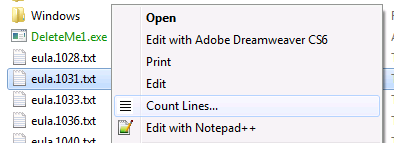
Step by Step Tutorial on the CodeProject.
Icon Handlers
Shell Icon Handlers are DLLs that are registered in the system to customise the appearance of icons.
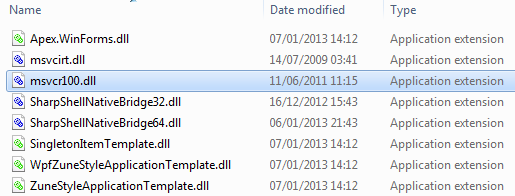
Step by Step Tutorial on the CodeProject.
Info Tip Handlers
Shell Info Tip Handlers are DLLs that are registered in the system to customise tooltips for items in the shell.
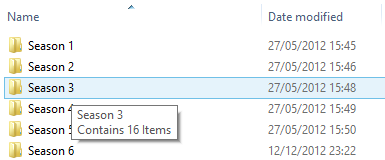
Step by Step Tutorial on the CodeProject.
Drop Handlers
Shell Drop Handlers are DLLs that are registered in the system to extend the drag and drop functionality in the Shell.
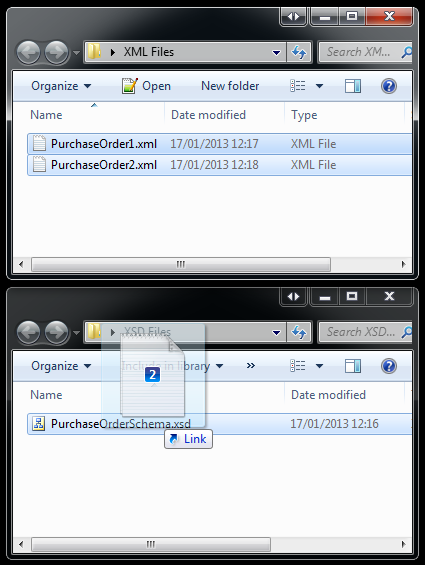
Step by Step Tutorial on the CodeProject.
Preview Handlers
Shell PreviewHandlers are dlls that can be registered in the system to allow you to create visually rich previews for items that are displayed directly in Windows Explorer.
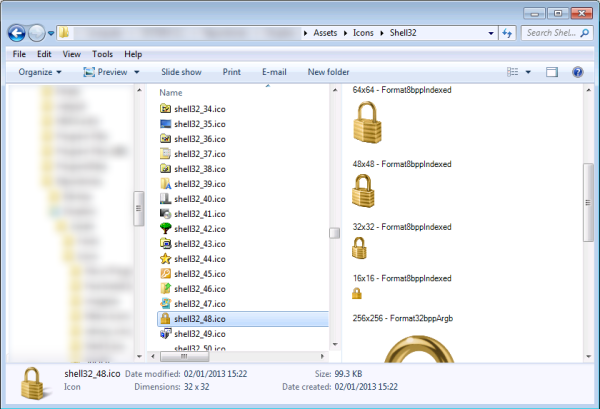
Step by Step Tutorial on the CodeProject.
Icon Overlay Handlers
Shell Icon Overlay Handlers can be really useful. They let you display an icon overlay over shell objects to provide extra information. Programs like Dropbox use these overlays to show whether files are synchronised or not.
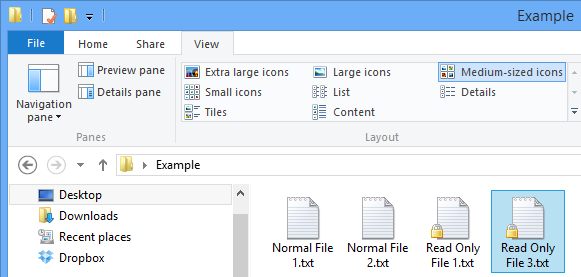
Step by Step Tutorial on the CodeProject.
Thumbnail Handlers
Shell Thumbnail Handlers (or as they're sometimes known, Shell Thumbnail Providers) are COM servers that you can write to customise the appearance of the thumbnail icons in the Windows Shell.
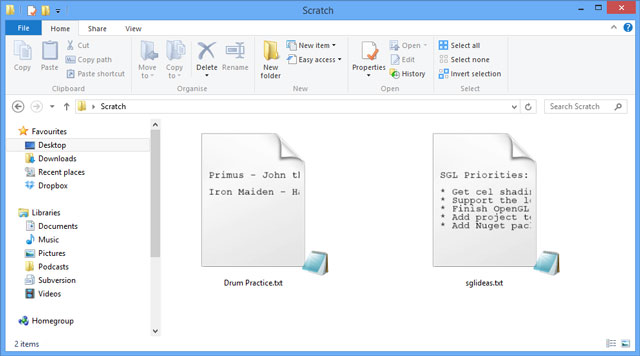
Step by Step Tutorial on the CodeProject.
Property Sheet Extensions
These are extensions that add extra pages to the property sheets shown for shell items such as files, network shares, folders and so on.
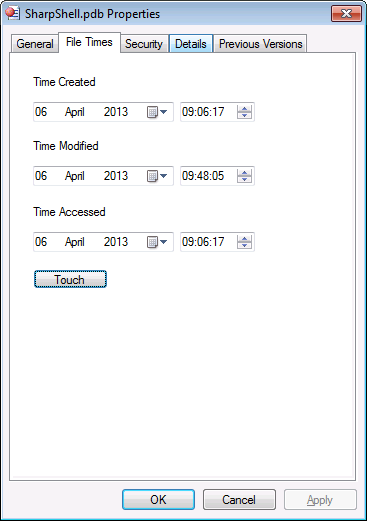
Documentation.
Desk Band Extensions
These are extensions which add custom functionality to the Windows Desktop or Task Bar.

Documentation
Developer Guide
The repository made up the following components:
Most developers will only need to work with the code in the SharpShell folder.
SharpShell is currently developed in Visual Studio 2017, and can be built using the Community Edition.
In order to maximize compatibility, we do not use the latest version of each SDK. The following components are needed:
- .NET Core runtime
- Microsoft Visual Studio 2017 Installer Projects
- Chocolatey (choco)
Building & Testing
As long as the correct components have be installed for Visual Studio, you should be able to just open the main ./SharpShell/SharpShell.sln solution to build, test and run any of the code or samples.
To build using Powershell (which is what is done in the CI/CD process), first allow Powershell to execute scripts and then install Chololatey:
Set-ExecutionPolicy Bypass -Scope Process -Force
[System.Net.ServicePointManager]::SecurityProtocol = [System.Net.ServicePointManager]::SecurityProtocol -bor 3072; iex ((New-Object System.Net.WebClient).DownloadString('https://community.chocolatey.org/install.ps1'))
Now the following scripts to run the processes:
| Script | Notes |
|---|
config.ps1 | Ensure your machine can run builds by installing necessary components such as nunit. Should only need to be run once. |
build.ps1 | Build all solutions. Ensures that we build both 32/64 bit versions of native components. |
test.ps1 | Run all tests, including those in samples. |
coverage.ps1 | Create a coverage report for the main SharpShell project (samples are not included). Reports are written to ./artifacts/coverage |
These scripts will generate various artifacts which may be useful to review:
artifacts\
  \build
    \SharpShell           # The SharpShell assembly.
  \tests                  # NUnit Test Reportsd
  \coverage               # Coverage Reports
Only assemblies and binaries which need to be copied into other projects are added to the artifacts/build folder. This makes chaining more complex dependencies manageable. The solution is fairly standard, but be aware that:
SharpShell contains the SharpShellNativeBridge binaries. To update them, build the SharpShellNativeBridge solution from source and embed the new binaries.- The
SharpShell assembly is copied to artifacts/build/SharpShell folder after a successful build.
- The
SharpShell assembly is embedded in the ServerRegistrationManager binary. The assembly is copied from artifacts/build/SharpShell prior to the server registration manager build.
All of the above steps are automated, and will run whether a build is trigger from Visual Studio, the build.ps1 script or msbuild.
Enabling Logging
A detailed guide explaining how to configure and use logging for SharpShell is at:
./docs/logging/logging.md
You can also use the SharpShell-Easy-Log tool to quickly enable/disable logging options and view the logs realtime:
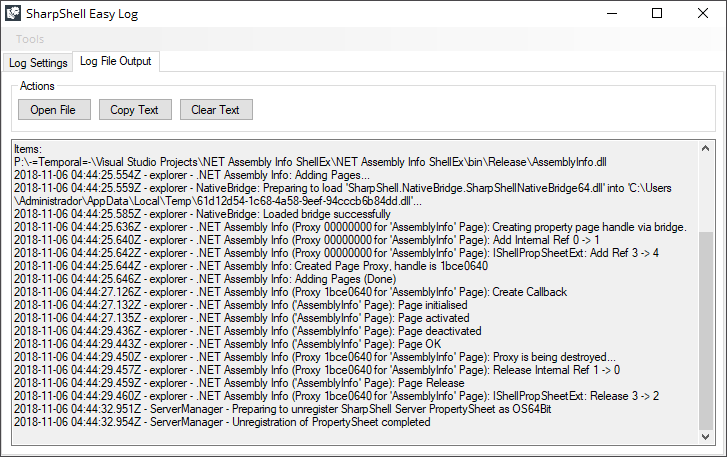
The tool is available at: github.com/ElektroStudios/SharpShell-Easy-Log
CI/CD
CI/CD is currently handled by AppVeyor. AppVeyor will:
- Build the project
- Run the tests
- Create the core SharpShell NuGet Package
- Publish the package to nuget.org if a version tag is pushed
- Create a GitHub release with the package if a version tag is pushed
Creating a Release
To create a release:
- Update the version number in
SharedAssemblyInfo.cs
- Update the
CHANGELOG.md
- Create a new version tag, then push
AppVeyor will build and publish a new NuGet package and as long as a new semver tag is pushed.
Compatibility
The goal is to maximize compatibility for platforms which are supported. For platforms which are no longer in support SharpShell may work, but is not tested.
Note: At the moment compatibility across platforms is being verified, this section of the documentation will be updated soon.
🟢 - Fully Supported; tested and verified as part of the build process
🟠 - Partly Supported; potentially will work, but no longer formally supported or tested
🔴 - Not Supported; confirmed that this will not work, unless the code is modified
| Component | Compatibility |
|---|
| Windows | |
| Windows 11 | 🟢 Fully Supported |
| Windows 10 | 🟢 Fully Supported |
| Windows 8.1 | 🟠 Partly Supported |
| Windows 8 | 🟠 Partly Supported |
| Windows 7 | 🟠 Partly Supported |
| Visual Studio | |
| Visual Studio 2022 | 🟢 Fully Supported |
| Visual Studio 2019 | 🟢 Fully Supported |
| Visual Studio 2017 | 🟠 Partly Supported |
| Visual Studio 2015 | 🟠 Partly Supported |
| msbuild | |
| msbuild 17.3 | 🟢 Fully Supported |
| msbuild 16.11 | 🟢 Fully Supported |
| msbuild 15.9 | 🟠 Partly Supported |
Documentation
Documentation is still work in progress, and any contributions would be most welcome!
Contributor Guide
The project is maintained by the following group:
We have a Code of Conduct aimed at keeping the community welcoming and inclusive.
Testimonials
If you've used SharpShell and would like to add a testimonial, just send me a message!
> CmisSync, our Dropbox-like client for Enterprise Content Management servers, just switched to SharpShell,
> and we are extremely pleased with this library. Our previous custom-built Windows Explorer integration
> was buggy, unreliable and hard to maintain, and SharpShell is really rock-solid in comparison. The best
> part: It only took 2 days to integrate SharpShell into our software, testing and installer included.
> Thanks SharpShell!
Nicolas Raoul - CmisSync.com
Projects that use SharpShell
Send me a message to add a project to this list:
Thanks
Many thanks to JetBrains for providing an Open Source License for their products!

License
SharpShell is licensed under the MIT License - the details are at LICENSE.md